We use affiliate links to run our site. When you buy through links on our site, we may earn an affiliate commission, without any added cost to you. Learn more
Let’s be honest—not everyone has a sprawling backyard with unlimited square footage. If you’re living in an apartment, a condo, or a home with a postage-stamp yard, you’ve probably thought: “Gardening just isn’t for me.”
Here’s the truth that’ll change your mind: small-space gardening isn’t a limitation—it’s a superpower.
Think about it this way. Traditional gardeners spread their efforts across massive plots, often wasting water, nutrients, and energy on plants that don’t justify the space they occupy. Meanwhile, small-space gardeners are forced to be strategic. We choose every plant carefully. We optimize every inch. We get more from less—and that’s where the magic happens.
According to the National Gardening Association, container gardeners and apartment dwellers are among the fastest-growing segments of the gardening community, with over 18 million households now growing food in containers. You’re not alone, and you’re definitely not behind.
The reality? With the right strategies, you can grow enough fresh vegetables, herbs, and fruits on a balcony, patio, or small yard to meaningfully supplement your grocery bills and enjoy the therapeutic benefits of gardening. This isn’t theoretical—it’s proven.
The Small-Space Gardening Mindset: Think Vertical, Not Horizontal
Before we dive into the 10 tips, we need to shift how you think about gardening entirely.
Why Traditional Gardening Fails in Tight Spaces
Traditional row gardening was designed for farms with acres of land. It assumes horizontal expansion. You plant in long rows, space plants far apart for equipment access, and dedicate massive areas to single crops. This approach is catastrophically inefficient in small spaces.
When you try to squeeze traditional gardening into a tiny area, you get frustrated. You waste resources. You harvest disappointingly little. Then you quit.
The problem isn’t you. The problem is the wrong mental model.
How Modern Gardeners Are Winning
Modern small-space gardeners have flipped the script. Instead of thinking “How much can I fit horizontally?” they ask: “How can I use every dimension—height, depth, and layering—to maximize production?”
This shift changes everything. Suddenly, a 4×4 foot balcony becomes viable. A south-facing wall becomes prime real estate. Even a sunny windowsill becomes a micro-garden.
The secret? Understanding that small-space gardening requires intentionality, not luck.
Small-Space Gardening Tips [The Top 10]
Tip #1: Choose Dwarf & Compact Varieties (Not Everything Grows Big)
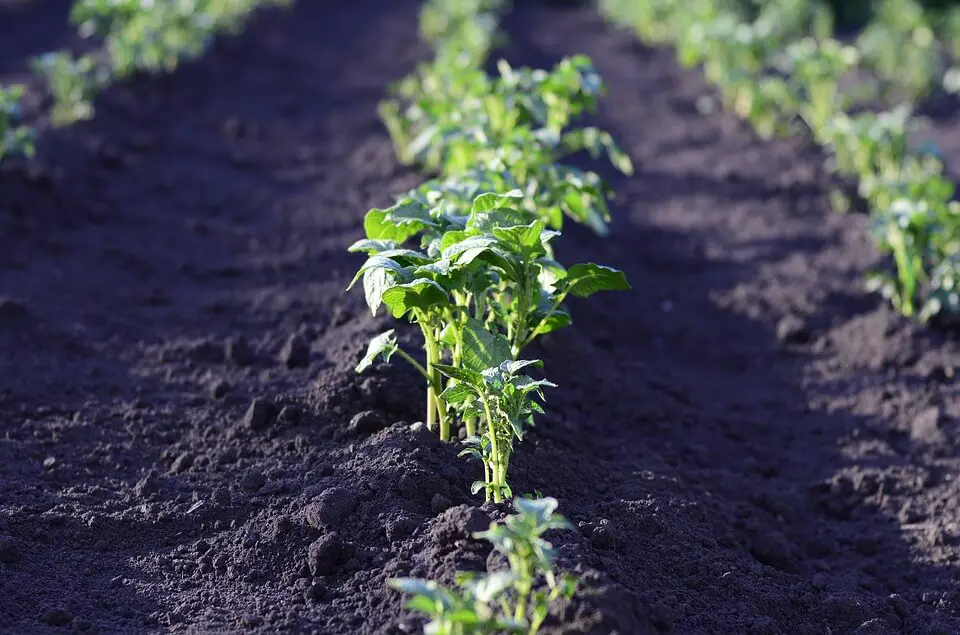
Here’s a mistake I see constantly: gardeners plant standard tomato varieties in containers and wonder why they get a single fruit before the plant collapses.
The fix is simple: choose dwarf and compact varieties from the start.
Dwarf varieties are specifically bred to produce full-sized yields in a fraction of the space. They’re not inferior—they’re optimized. It’s like comparing a smart car to a pickup truck. Different tools for different jobs.
Best Dwarf Vegetables for Apartments
| Vegetable | Variety | Container Size | Days to Harvest | Yield Per Plant |
| Tomato | ‘Tiny Tim’ or ‘Patio’ | 5-gallon | 60-70 | 50-100 fruits |
| Pepper | ‘Lunchbox’ or ‘Mini Bell’ | 5-gallon | 60-90 | 20-30 peppers |
| Eggplant | ‘Ichiban’ or ‘Orient Express’ | 5-gallon | 70-85 | 8-12 fruits |
| Cucumber | ‘Spacemaster’ or ‘Bush Pickle’ | 3-gallon | 50-65 | 15-20 cukes |
| Lettuce | ‘Buttercrunch’ or ‘Oakleaf’ | 6-8 inches deep | 45-60 | Continuous |
| Beans | ‘Provider’ or ‘Bush Blue Lake’ | 3-gallon | 50-60 | 1-2 lbs |
| Carrot | ‘Thumbelina’ or ‘Paris Market’ | 8-10 inches deep | 60-70 | 20-30 carrots |
| Kale | ‘Winterbor’ or ‘Lacinato’ | 3-gallon | 50-70 | 1-2 lbs per harvest |
The key insight? These varieties aren’t just smaller—they’re bred for productivity. A ‘Tiny Tim’ tomato plant in a 5-gallon container will outproduce a standard ‘Brandywine’ in the same space by a factor of 10.
Where to Source Dwarf Seeds
- Territorial Seed Company — specializes in compact varieties
- Johnny’s Selected Seeds — excellent for container-specific cultivars
- Burpee — extensive dwarf variety selection
- Local seed libraries — often have community-tested varieties
Tip #2: Master the Art of Vertical Growing
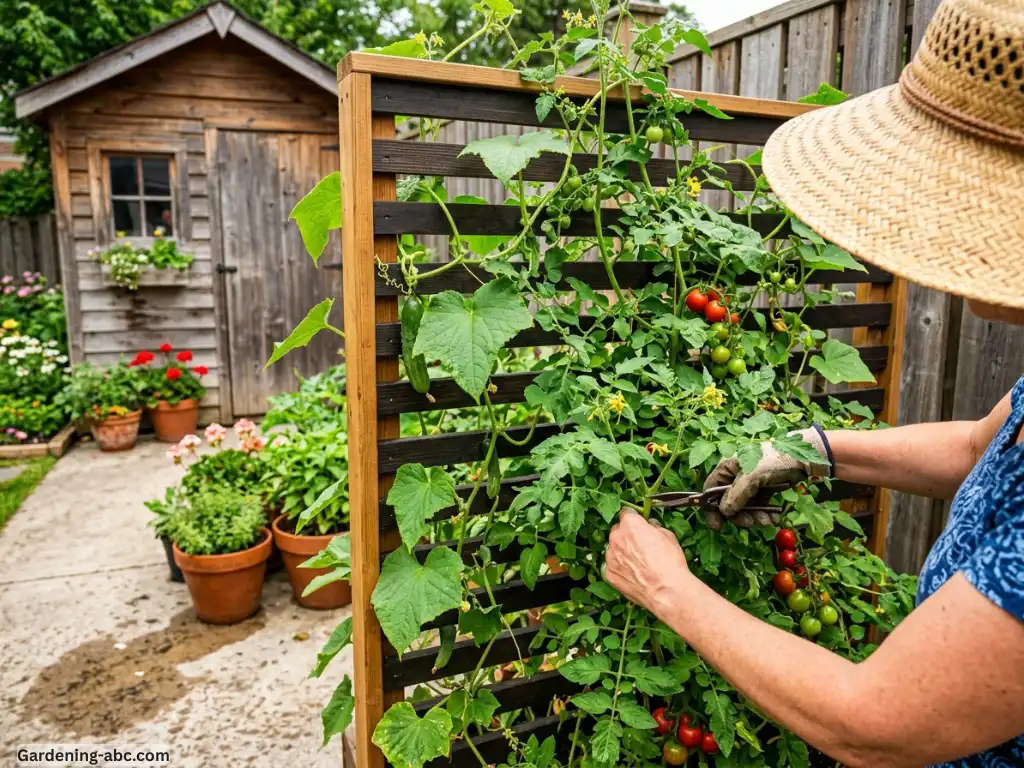
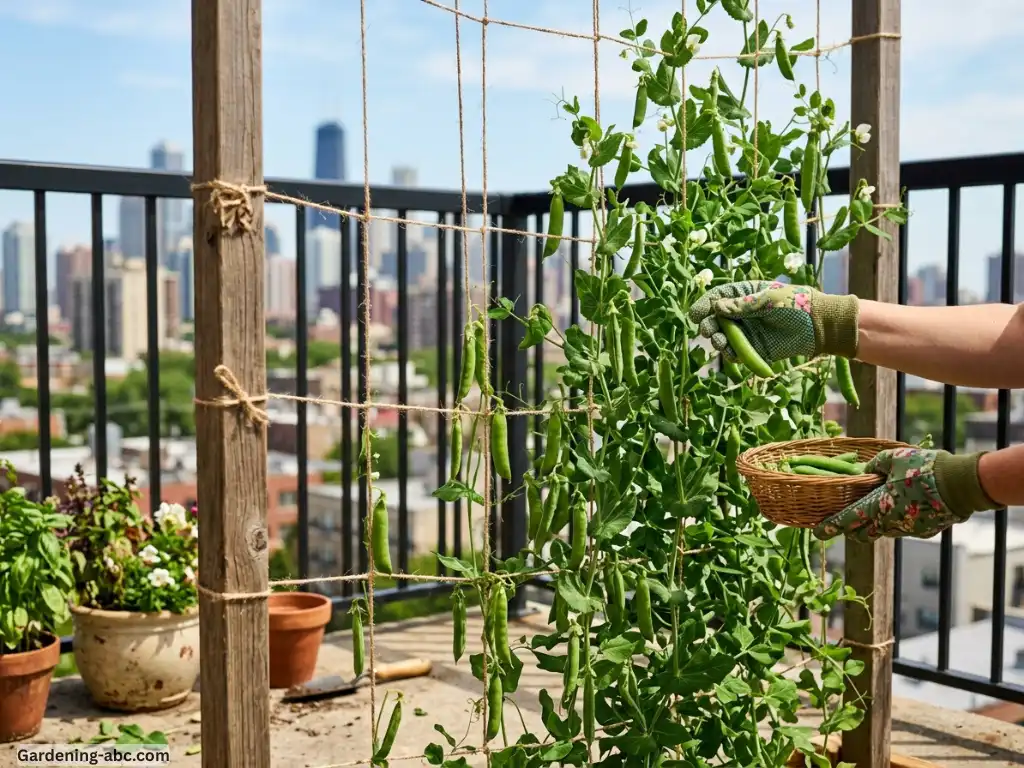
Now here’s where small-space gardening becomes genuinely exciting.
Imagine you’re looking at your garden from above. Every square foot of horizontal space is precious. But what about the vertical dimension? Most small-space gardeners completely ignore it—which is like leaving money on the table.
Vertical growing isn’t just about aesthetics (though a wall of climbing beans looks incredible). It’s about tripling or quadrupling your productive capacity without expanding your footprint.
Trellising Systems That Actually Work
String Trellises — The simplest and cheapest option. Run twine or string between two anchor points. Works beautifully for peas, beans, and cucumbers. Cost: $5-10 per trellis.
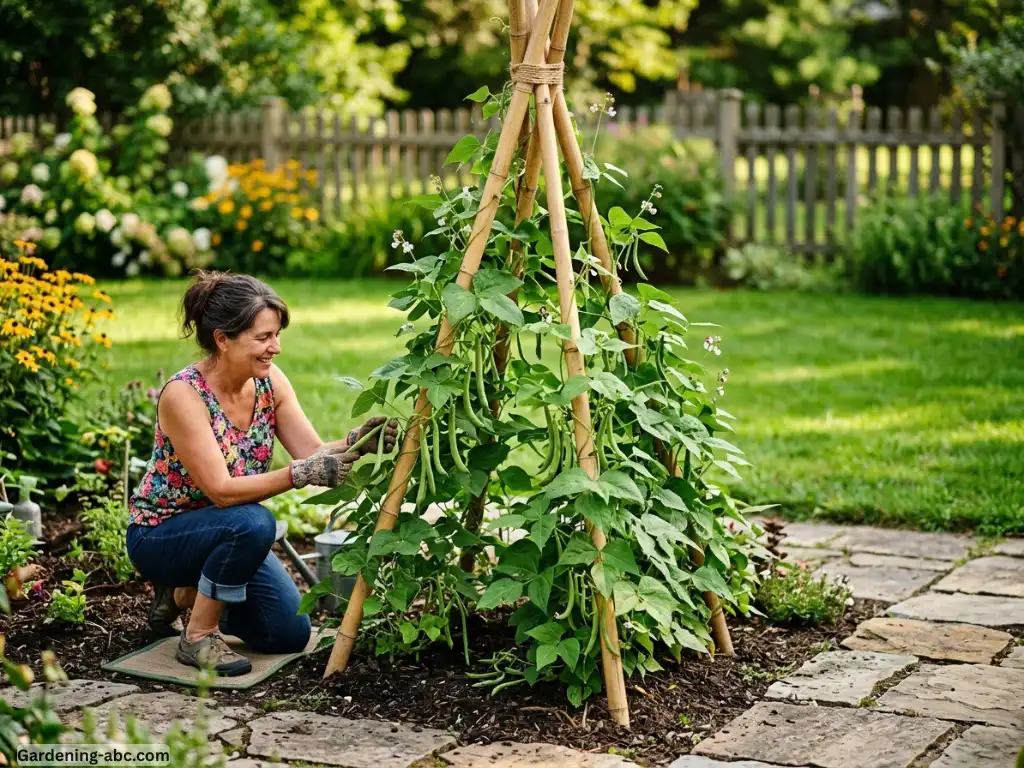
Bamboo Teepees — Lash 6-8 bamboo poles together and tie twine horizontally. Ideal for beans and peas. Reusable for years. Cost: $15-25.
Wall-Mounted Trellises — Attach wooden or metal trellises directly to walls, fences, or balcony railings. Perfect for permanent installations. Cost: $20-50.
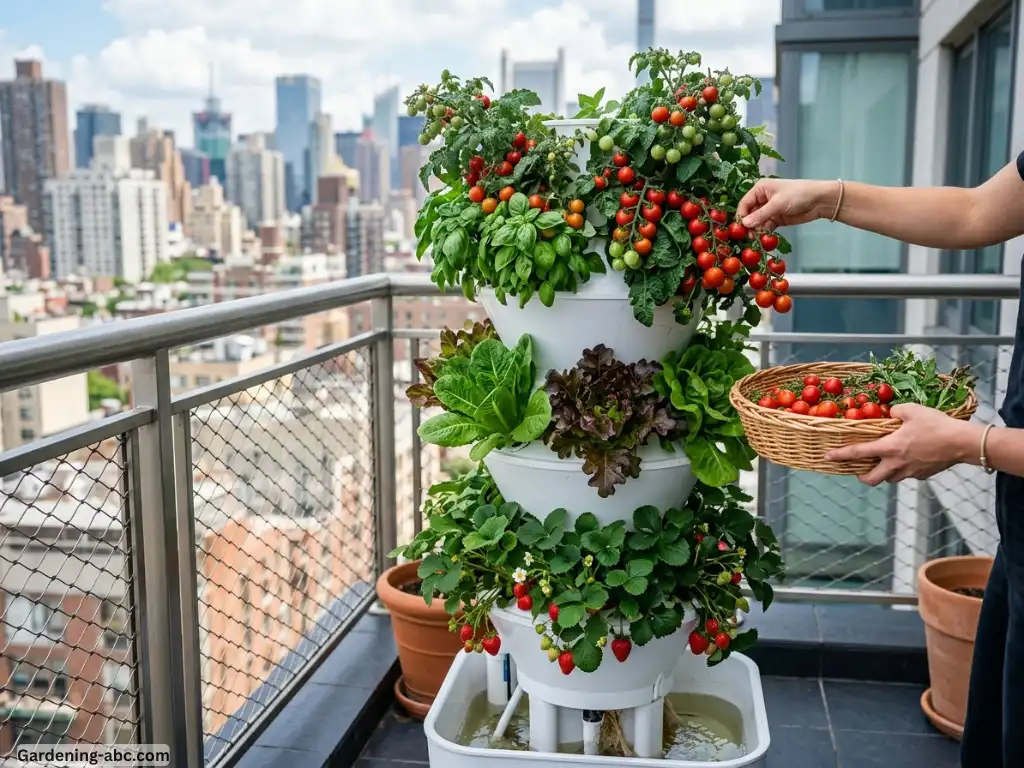
Hanging Baskets & Cascading Systems — For trailing varieties like cherry tomatoes, strawberries, and herbs. Maximizes vertical space on walls or overhead. Cost: $10-30 per basket.
Tower Gardens — Stackable planting systems that grow 20+ plants in a 2×2 foot footprint. Premium option but incredibly efficient. Cost: $50-150.
Best Vertical Crops & Yield Expectations
| Crop | Trellis Type | Yield Per 4ft Trellis | Days to Harvest | Notes |
| Pole Beans | String/Bamboo | 3-5 lbs | 60-70 | Prolific producer |
| Peas | String | 2-3 lbs | 60-70 | Spring/fall crop |
| Cucumbers | String/Trellis | 4-8 lbs | 50-70 | Prevents disease |
| Indeterminate Tomatoes | Stake/Cage | 5-15 lbs | 70-85 | Requires pruning |
| Squash | Heavy-duty trellis | 3-6 fruits | 50-70 | Use slings for support |
| Melons | Heavy-duty trellis | 2-4 fruits | 70-90 | Use fabric slings |
| Hops | Heavy twine | 1-2 lbs (dried) | 90+ | Perennial |
The physics here is elegant: by training plants upward, you reduce disease pressure (better air circulation), improve sunlight penetration to lower leaves, and free up ground space for companion plantings.
Tip #3: Container Gardening 101 (Size, Soil, Drainage)
Container gardening is the foundation of small-space success, but most people get it wrong from day one.
The three critical variables are: container size, soil composition, and drainage. Get any one wrong, and your plants suffer.
Container Size Chart: What Grows Where
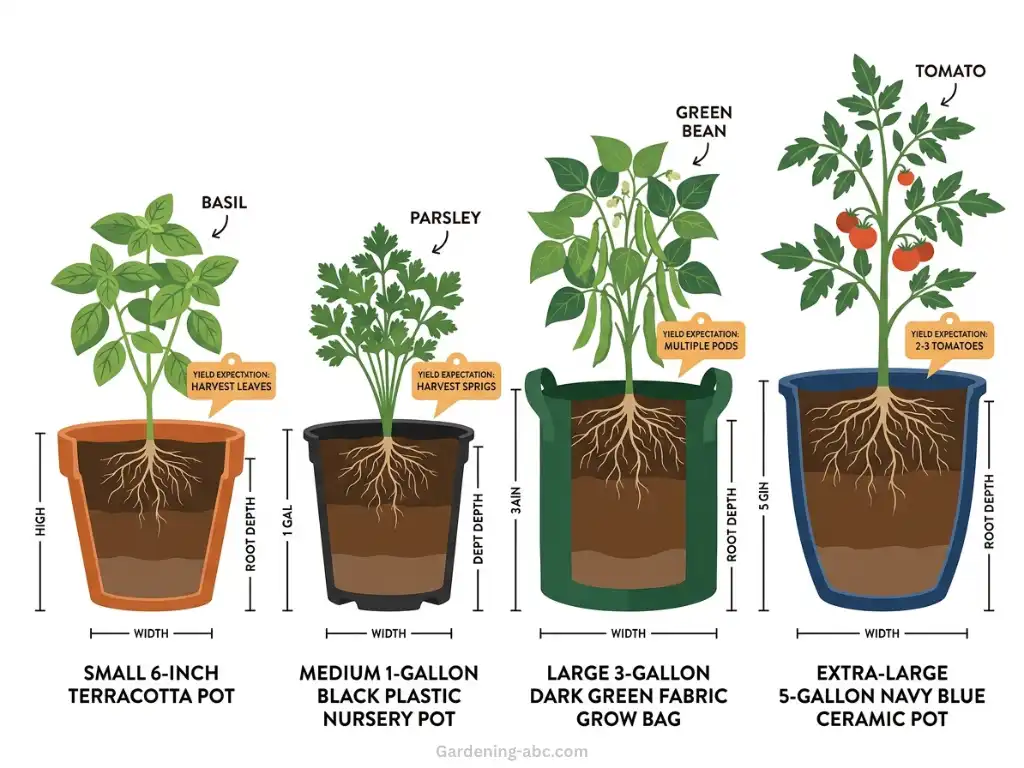
| Plant Type | Minimum Container Size | Ideal Size | Root Depth Needed |
| Herbs (basil, parsley) | 6-8 inches | 8-10 inches | 6-8 inches |
| Lettuce & Greens | 6-8 inches | 10-12 inches | 6-8 inches |
| Peppers | 3-gallon (12L) | 5-gallon (19L) | 12-18 inches |
| Tomatoes (determinate) | 3-gallon (12L) | 5-gallon (19L) | 18-24 inches |
| Tomatoes (indeterminate) | 5-gallon (19L) | 10-gallon (38L) | 24+ inches |
| Eggplant | 3-gallon (12L) | 5-gallon (19L) | 12-18 inches |
| Beans | 2-3 gallon (8-12L) | 5-gallon (19L) | 12-18 inches |
| Carrots | 8-10 inches deep | 12 inches deep | 10-12 inches |
| Potatoes | 5-gallon (19L) | 10-gallon (38L) | 12-18 inches |
| Strawberries | 6-8 inches | 10-12 inches | 6-10 inches |
Pro tip: Bigger containers are almost always better. They hold more soil, retain moisture longer, and provide more root space. A tomato in a 10-gallon container will outperform one in a 5-gallon container by 30-50%.
The Perfect Soil Mix Recipe
This is where most gardeners fail. They use regular garden soil in containers—which compacts, drains poorly, and suffocates roots.
Instead, use a high-quality potting mix. Here’s the ideal recipe:
DIY Container Soil Mix (by volume):
- 40% high-quality potting soil (e.g., Miracle-Gro or similar)
- 30% coconut coir or peat moss (for water retention)
- 20% perlite or vermiculite (for drainage and aeration)
- 10% compost or aged manure (for nutrients)
Why this works:
- Potting soil provides structure and some nutrients
- Coir/peat retains moisture without waterlogging
- Perlite creates air pockets for root respiration
- Compost adds slow-release nutrients
Drainage is non-negotiable. Every container must have drainage holes. No exceptions. Waterlogged roots = root rot = dead plants. It’s that simple.
Tip #4: Maximize Space With Square-Foot Gardening
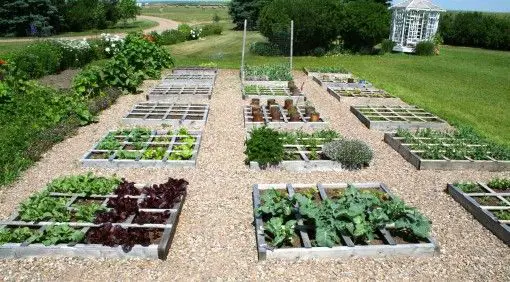
Square-foot gardening (SFG) is a game-changer for small spaces. Developed by Mel Bartholomew in the 1970s, it’s a system of dividing growing areas into 1-foot squares and planting intensively within each square.
The results? Studies show SFG yields 100% more produce per square foot than traditional row gardening, while using 80% less water.
Spacing Guidelines by Crop (Per Square Foot)
| Crop | Plants Per Square Foot | Spacing | Harvest Window |
| Lettuce | 4 | 6 inches apart | 45-60 days |
| Spinach | 4 | 6 inches apart | 40-50 days |
| Chard | 1 | 12 inches | 50-60 days (cut-and-come-again) |
| Beets | 1 | 12 inches | 60-70 days |
| Carrots | 9-16 | 2-3 inches apart | 60-80 days |
| Radishes | 16 | 2 inches apart | 25-30 days |
| Onions | 4 | 6 inches apart | 100-120 days |
| Tomatoes (determinate) | 1 | 12 inches | 70-85 days |
| Peppers | 1 | 12 inches | 60-90 days |
| Beans | 4 | 6 inches apart | 50-70 days |
| Peas | 8-9 | 3-4 inches apart | 60-70 days |
| Basil | 4 | 6 inches apart | Continuous |
| Parsley | 4 | 6 inches apart | Continuous |
The key principle: Smaller plants get more per square foot. Larger plants get one per square foot. This prevents competition while maximizing total yield.
Tip #5: Interplant Fast & Slow-Growing Crops
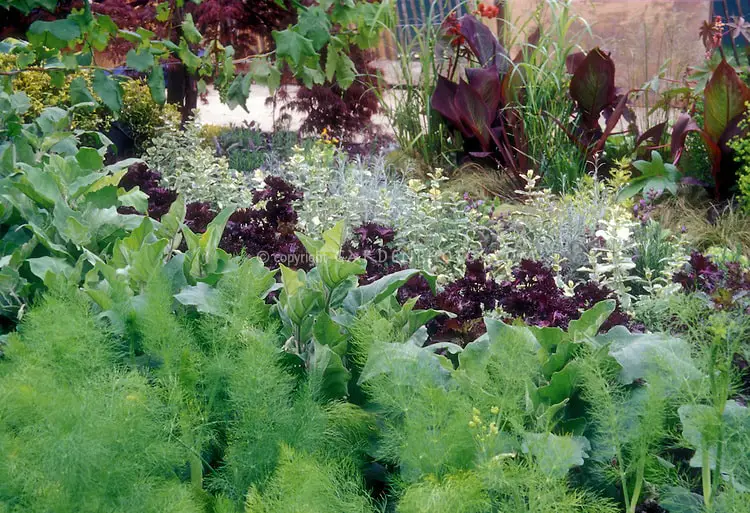
Here’s a strategy that separates experienced small-space gardeners from beginners: interplanting.
Different vegetables mature at different speeds. Radishes mature in 25 days. Carrots take 70 days. Tomatoes take 85 days.
So why not plant them together?
Plant radishes and carrots in the same square. Harvest the radishes after 25 days, giving the carrots more space to develop. By the time you’re harvesting carrots, you’ve already gotten a full crop of radishes from the same space.
Example Interplanting Combinations:
- Radishes + Carrots + Onions — Radishes ready first (25 days), then onions (120 days), then carrots (70 days). Three crops from one space.
- Lettuce + Tomatoes — Harvest lettuce (60 days) before tomato plant needs the space.
- Peas + Beans — Spring peas (60 days), then summer beans (60 days). Two crops per season.
- Spinach + Peppers — Cool-season spinach (50 days), then warm-season peppers (90 days).
This strategy effectively doubles or triples your annual harvest from the same space.
Tip #6: Grow Perennial Vegetables for Year-Round Harvests
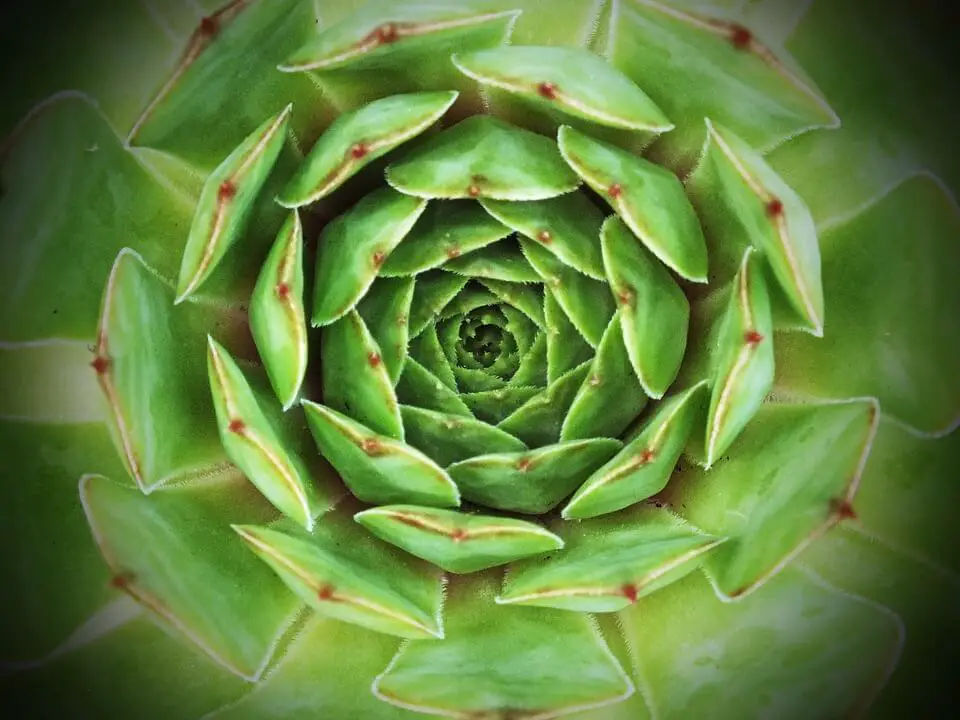
Most gardeners think of gardening as seasonal. You plant in spring, harvest in summer, then stop.
But what if you could harvest continuously for years with minimal effort?
Perennial vegetables are your answer. These plants come back year after year, producing harvests with minimal maintenance.
Best Perennial Vegetables for Small Spaces:
Swiss Chard — Technically a perennial in mild climates, but you can harvest continuously for 2+ years. One plant produces 50+ harvests. Container size: 3-gallon.
Kale — Incredibly cold-hardy. Harvest outer leaves continuously. One plant produces for 2-3 years. Container size: 3-gallon.
Asparagus — Takes 2-3 years to establish, but then produces for 15-20 years. Yields 1-2 lbs per plant annually. Container size: 5-gallon minimum.
Rhubarb — Perennial that produces for 10+ years. Harvest stalks continuously. Container size: 5-gallon.
Artichokes — Perennial in mild climates. Produces for 3-5 years. Container size: 5-gallon.
Perennial Herbs — Rosemary, thyme, oregano, sage, and chives all produce for years. Container size: 6-10 inches.
Strawberries — Produce for 3-4 years. Everbearing varieties give continuous harvests. Container size: 6-8 inches.
The beauty of perennials? You plant once and harvest repeatedly. No replanting. No starting seeds. Just consistent production.
Tip #7: Choose Multi-Purpose Plants (More Bang for Your Buck)
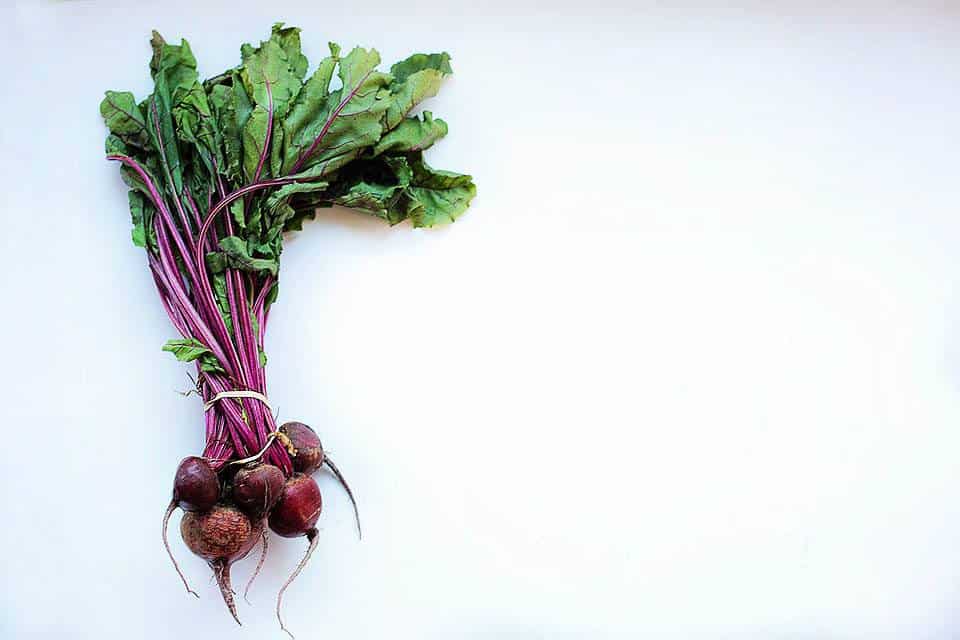
Here’s a principle that maximizes your harvest: grow plants where you can eat multiple parts.
Instead of growing a plant for a single edible component, choose varieties where you get multiple harvests or multiple edible parts.
Multi-Purpose Plant Examples:
- Beets — Eat the roots (mature in 70 days) AND the greens (harvest at 30 days). From one plant, you get two distinct crops.
- Kale — Harvest outer leaves continuously for 2-3 years. One plant = dozens of harvests.
- Chard — Same as kale. Continuous harvesting for years.
- Radishes — Eat the roots AND the seed pods (harvest immature pods for a peppery snack).
- Beans — Eat immature pods as snap beans (50 days) or let them mature for dried beans (70+ days). Two different products from one plant.
- Herbs — Basil, parsley, and cilantro produce continuously for months. Harvest leaves repeatedly.
- Lettuce & Greens — Use “cut-and-come-again” method. Harvest outer leaves, plant keeps producing for 2-3 months.
- Squash — Eat immature fruits as zucchini (50 days) or let them mature as winter squash (70+ days).This strategy is about efficiency. You’re not just growing plants; you’re maximizing the number of harvests per plant.
Tip #8: Succession Plant Throughout the Season
Succession planting is the difference between a one-time harvest and continuous harvests.
Instead of planting all your lettuce at once (and then having nothing for weeks), plant a new row every 2 weeks. Instead of one tomato harvest in August, you’re harvesting from June through October.
Succession Planting Calendar Example (Temperate Climate):
Spring (March-April):
- Plant: Peas, spinach, lettuce, radishes, carrots
- Harvest: Radishes (30 days), peas (60 days)
Late Spring (May):
- Plant: Beans, squash, cucumbers
- Harvest: Lettuce (continuous), spinach (continuous)
Early Summer (June):
- Plant: Second round of beans, cucumbers
- Harvest: Beans (60 days), squash (50 days)
Mid-Summer (July):
- Plant: Fall crops (lettuce, spinach, kale, broccoli)
- Harvest: Cucumbers (continuous), tomatoes begin
Late Summer (August):
- Plant: Final fall crops
- Harvest: Tomatoes (peak), peppers, eggplant
Fall (September-October):
- Harvest: Fall crops, late tomatoes, peppers
- Plant: Garlic for spring
The result? Instead of a single harvest window, you’re harvesting something nearly every week from June through November.
Tip #9: Prioritize High-Yield Crops
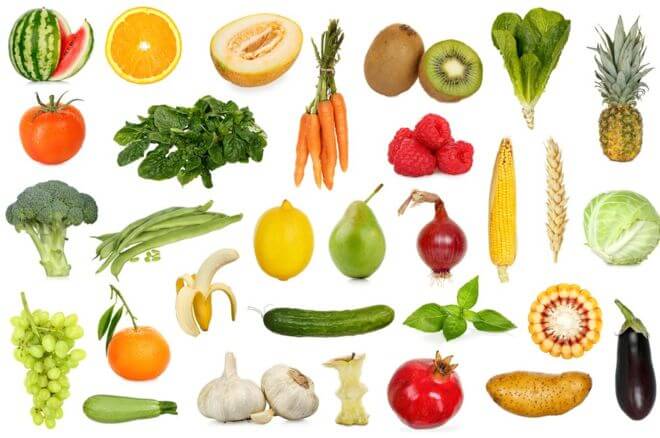
Not all vegetables are created equal when space is limited.
Some plants produce massive yields from minimal space. Others require significant space for modest returns. In small-space gardening, you must prioritize high-yield crops.
High-Yield Crops (Best ROI for Space):
| Crop | Yield Per Plant | Space Required | Days to Harvest | Efficiency Score |
| Cherry Tomatoes | 100-200 fruits | 5-gallon container | 70 | ⭐⭐⭐⭐⭐ |
| Pole Beans | 3-5 lbs | 3-gallon + trellis | 60 | ⭐⭐⭐⭐⭐ |
| Cucumbers | 4-8 lbs | 3-gallon + trellis | 60 | ⭐⭐⭐⭐⭐ |
| Peppers | 20-30 fruits | 5-gallon | 90 | ⭐⭐⭐⭐ |
| Chard | 1-2 lbs (continuous) | 3-gallon | 50+ | ⭐⭐⭐⭐ |
| Kale | 1-2 lbs (continuous) | 3-gallon | 50+ | ⭐⭐⭐⭐ |
| Basil | 50+ harvests | 6-inch pot | 30+ | ⭐⭐⭐⭐ |
| Lettuce | 1-2 lbs (continuous) | 10-12 inches | 45 | ⭐⭐⭐⭐ |
| Potatoes | 3-5 lbs | 5-gallon | 70 | ⭐⭐⭐ |
| Carrots | 1-2 lbs | 8-10 inches | 70 | ⭐⭐⭐ |
Low-Yield Crops to Avoid in Small Spaces:
- Corn (requires massive space, low yield per sq ft)
- Melons (takes up huge space, 1-2 fruits per plant)
- Pumpkins (sprawls everywhere, low density)
- Potatoes (decent yield but space-hungry)
- Cabbage (slow-growing, space-intensive)
Focus your limited space on the high-yield crops. You’ll get more food, more satisfaction, and more success.
Tip #10: Invest in Quality Soil & Nutrients
Here’s the unglamorous truth: gardening success is 80% soil, 20% everything else.
You can have perfect containers, ideal sunlight, and flawless technique. But if your soil is poor, your plants will struggle.
Why Soil Quality Matters
Container plants are entirely dependent on the soil you provide. They can’t send roots deeper to find nutrients. They can’t access groundwater. Everything they need must come from that container.
Signs of Poor Soil:
- Plants grow slowly despite adequate light
- Yellowing leaves (nutrient deficiency)
- Poor drainage (soil stays waterlogged)
- Compacted, hard soil
- Lack of beneficial microorganisms
Building Nutrient-Rich Container Soil
Start with quality ingredients:
- Premium potting soil (not garden soil)
- Aged compost or well-rotted manure
- Perlite or vermiculite for drainage
- Coconut coir for water retention
Add slow-release nutrients:
- Balanced fertilizer (10-10-10 NPK)
- Bone meal (phosphorus for flowering/fruiting)
- Blood meal (nitrogen for leafy growth)
- Kelp meal (trace minerals)
Maintain soil health throughout the season:
- Top-dress with compost every 4-6 weeks
- Apply liquid fertilizer every 2-3 weeks during the growing season
- Add mulch to retain moisture and suppress weeds
- Test soil pH annually (most vegetables prefer 6.0-7.0)
Pro tip: Invest in a soil testing kit ($15-30). Knowing your soil’s nutrient levels, pH, and composition is worth its weight in gold. You’ll avoid guessing and make targeted amendments.
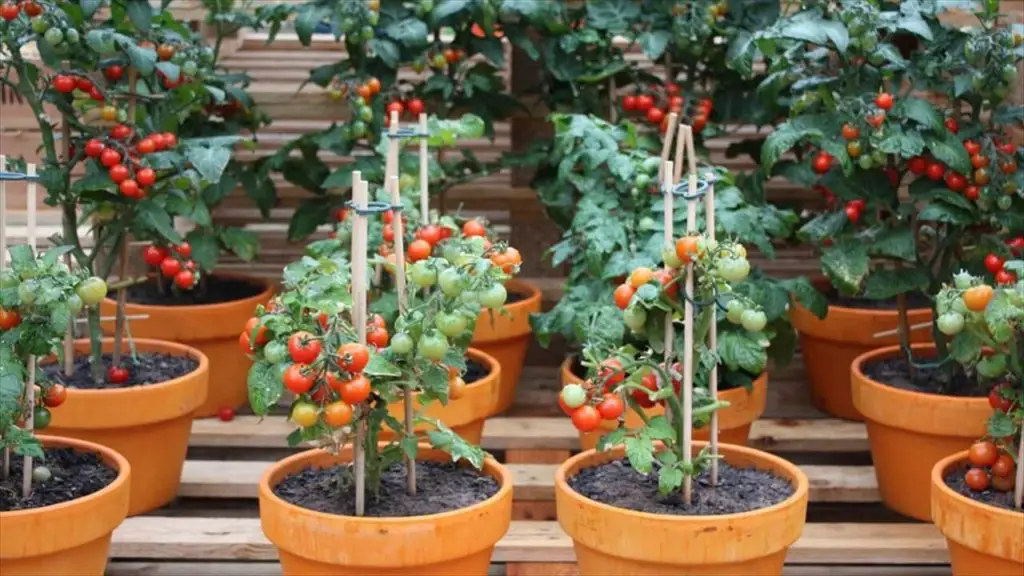
Small-Space Gardening Success: Real Results From Real Gardeners
Let’s talk about what’s actually possible.
Case Study 1: Balcony Garden, 4×8 feet
- Setup: 8 containers (5-gallon), 2 vertical trellises
- Crops: Tomatoes, peppers, beans, lettuce, herbs
- Annual yield: 150+ lbs of fresh produce
- Time investment: 5-7 hours per week during growing season
- Cost: $200 initial setup, $50 annual maintenance
Case Study 2: Patio Container Garden, 6×10 feet
- Setup: 12 containers (various sizes), tower garden
- Crops: Tomatoes, peppers, eggplant, cucumbers, greens, herbs
- Annual yield: 200+ lbs of fresh produce
- Time investment: 8-10 hours per week
- Cost: $400 initial setup, $75 annual maintenance
Case Study 3: Windowsill Herb Garden, 3×4 feet
- Setup: 6 small containers (6-8 inches)
- Crops: Basil, parsley, cilantro, chives, oregano, thyme
- Annual yield: 50+ lbs of fresh herbs
- Time investment: 2-3 hours per week
- Cost: $80 initial setup, $20 annual maintenance
The common thread? Intentional planning, quality soil, and consistent maintenance.
Conclusion: Your Tiny Garden Awaits
Small-space gardening isn’t a compromise. It’s not “gardening lite” or a consolation prize for people without land.
It’s a superior system that forces you to be strategic, intentional, and efficient. And that efficiency pays dividends.
You now have 10 proven strategies to transform whatever space you have—whether it’s a balcony, patio, windowsill, or small yard—into a productive garden. You understand that dwarf varieties aren’t inferior; they’re optimized. You know that vertical growing multiplies your capacity. You recognize that quality soil is non-negotiable. And you understand that succession planting and interplanting turn one-time harvests into continuous production.
The question isn’t whether you can garden in a small space. The evidence is overwhelming—millions of people are doing it successfully right now.
The real question is: When will you start?
Your tiny garden is waiting. And honestly? It might just change your life.
FAQ: Your Small-Space Gardening Questions Answered
1. How much sunlight do I need for a small-space garden?
Most vegetables require 6-8 hours of direct sunlight daily to produce well. Leafy greens (lettuce, spinach, kale) can tolerate 4-6 hours. Herbs vary—basil loves sun, but parsley tolerates partial shade. If you have less than 4 hours of direct sun, consider grow lights ($30-100). They’re surprisingly effective and make year-round gardening possible even in apartments with limited natural light.
2. What’s the best container material—plastic, ceramic, or fabric?
Each has trade-offs. Plastic containers are cheap, lightweight, and durable but can degrade in UV light and retain heat. Ceramic containers look beautiful but are heavy and expensive. Fabric grow bags (my personal favorite) offer excellent drainage, prevent root circling, and are affordable ($1-3 each). For small spaces, I recommend fabric grow bags or recycled plastic containers with drainage holes drilled in the bottom.
3. Can I reuse potting soil from last year?
Yes, but refresh it. Old potting soil compacts and loses nutrients. Best practice: Remove the top 2-3 inches of old soil and replace with fresh compost. Mix the remaining soil with 30-40% new potting soil and compost. This saves money while maintaining soil quality. Alternatively, add slow-release fertilizer and fresh compost to rejuvenate old soil.
4. How often should I water container gardens?
Container plants need more frequent watering than in-ground gardens because they can’t access deeper moisture. General rule: Water when the top 1-2 inches of soil feel dry to the touch. In hot weather, this might be daily. In cool weather, every 2-3 days. Pro tip: Water in early morning to reduce evaporation and disease pressure. Check soil moisture with your finger before watering—overwatering is the #1 killer of container plants.
5. What if I only have a north-facing balcony with limited sun?
You’re not out of luck. Shade-tolerant crops include lettuce, spinach, kale, chard, parsley, cilantro, mint, and other leafy greens. These thrive in 4-6 hours of indirect light. Grow lights are your secret weapon—even inexpensive LED shop lights ($20-40) can support full vegetable production indoors. Many apartment gardeners use grow lights on north-facing balconies and achieve impressive yields year-round.
Don’t Forget to PIN IT
Amazon and the Amazon logo are trademarks of Amazon.com, Inc, or its affiliates.

Hi there! My name is Prasenjit and I’m an avid gardener and someone who has grown a passion for growing plants. From my hands-on experience, I have learned what works and what doesn’t. Here I share everything I have learned.