We use affiliate links to run our site. When you buy through links on our site, we may earn an affiliate commission, without any added cost to you. Learn more
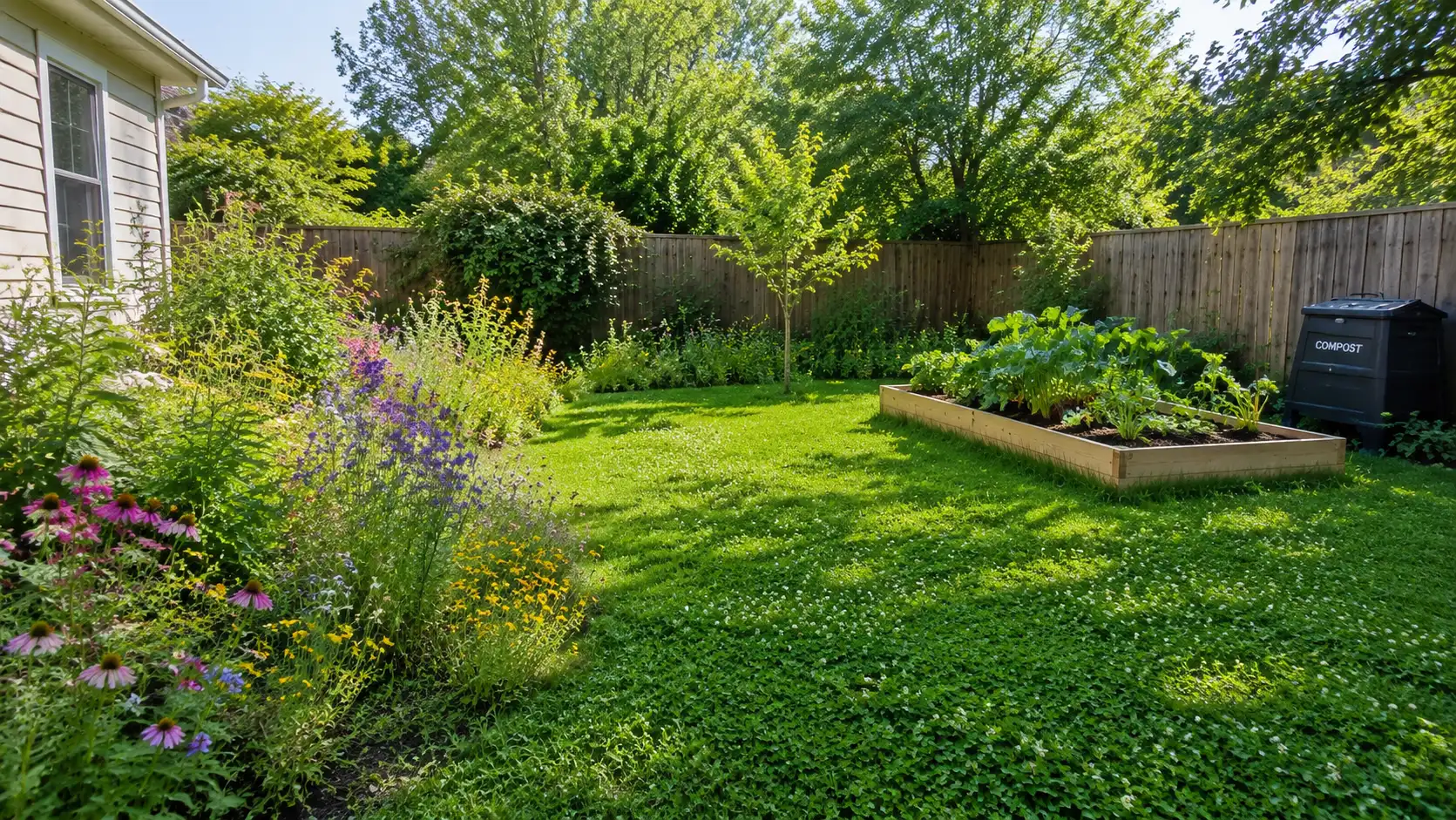
Your garden is quietly doing something remarkable. Even a modest backyard can filter stormwater, shelter pollinators, lock away carbon, and grow your own food — all at once. But most American yards are also quietly draining resources: water, money, and chemicals that could be saved with a few small shifts in how we garden.
The good news? Sustainable gardening in 2026 doesn’t require a master gardener certificate, a big budget, or a complete overhaul. It asks only for a willingness to work with your local environment rather than against it — and to start somewhere, even imperfectly.
Consider this: a suburban gardener in the Mid-Atlantic with a standard-sized backyard implemented just three of the changes in this list over a single growing season. She reduced water use by 30%, noticed a 40% increase in bee and butterfly visits, and saved over $200 she’d previously been spending on bagged compost. None of it required professional help. All of it started with one Saturday afternoon.
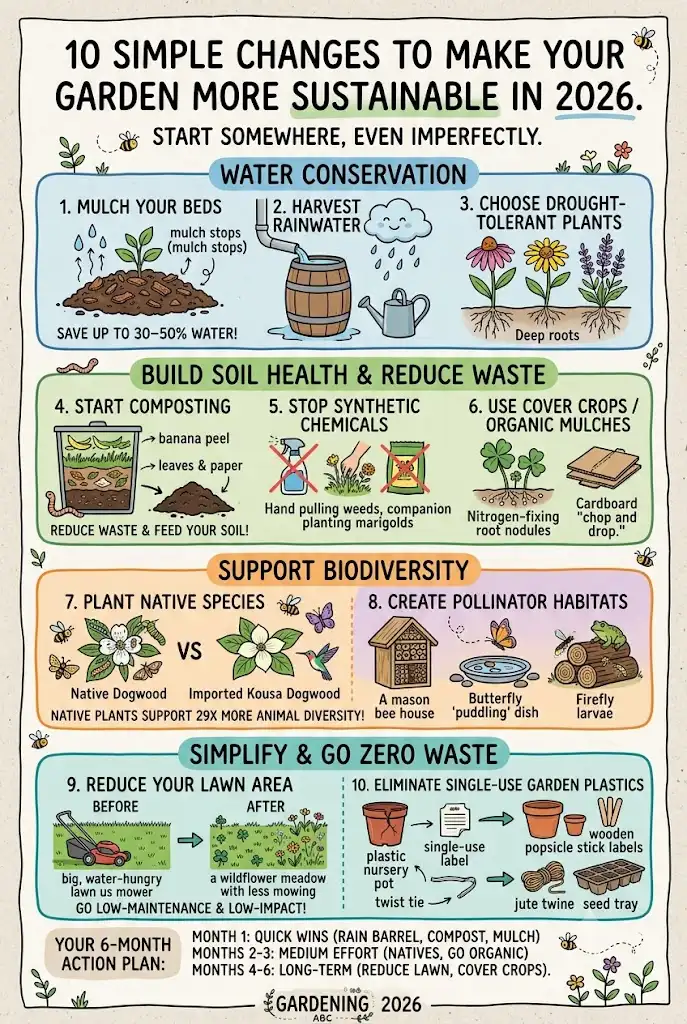
This article covers 10 practical, low-cost changes — organized from quickest wins to longer-term investments — with honest timelines and simple steps for each. You don’t need to do all 10. Start with two or three that fit your garden, your climate, and your schedule.
Why Your Garden Matters More Than You Think
The United States has an estimated 40–50 million acres of residential lawn — roughly three times the surface area of the country’s largest irrigated crop, corn. What happens in those spaces adds up fast. Residential outdoor water use averages nearly 8 billion gallons every day nationwide, and in arid regions like the Southwest, outdoor watering can account for up to 60% of a household’s total water use.
The chemical load is equally striking. Suburban lawns and gardens receive between 3.2 and 9.8 pounds of pesticide per acre — more than agricultural land. Much of that runs off into local waterways with every rain event.
But here’s the flip side: carbon sequestration — the process by which plants and soil absorb and store atmospheric CO₂ — means that a healthy, well-managed garden can make a genuine climate contribution. And biodiversity, the variety of living species in an ecosystem, increases dramatically when home gardens shift toward native plants and natural practices.
According to University of Delaware ecologist Dr. Doug Tallamy’s research, if just 10% of lawn in every American home, school, and park were converted to native plants, insects would gain access to four million acres of livable habitat overnight.
The goal of this guide isn’t perfection. It’s progress — and progress starts now.
Start with Water Conservation
Water is arguably the single biggest area where home gardeners can make a fast, visible difference. These three changes alone can reduce your garden’s water use by 30–50%.
Change 1: Mulch Your Beds
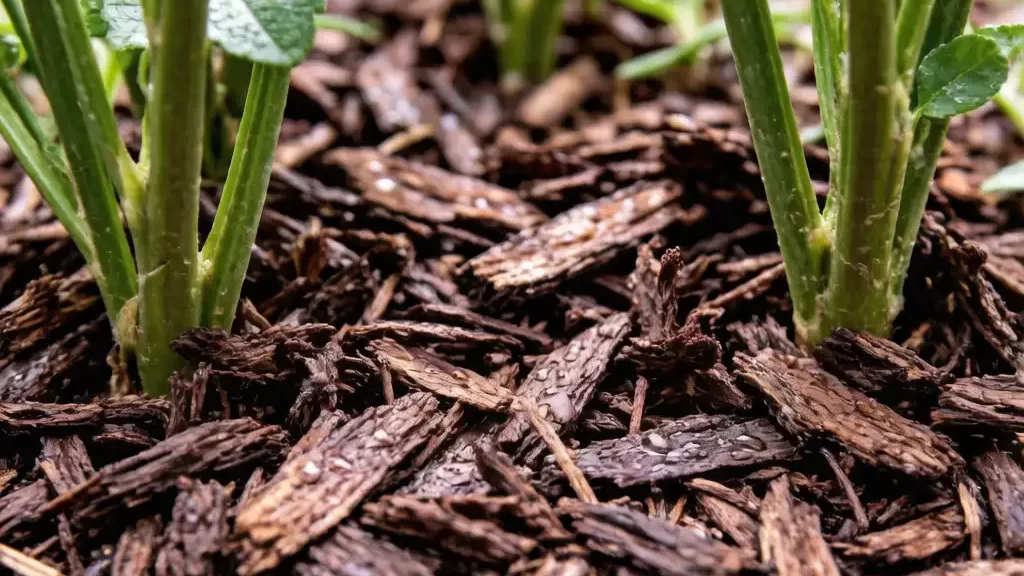
Mulching means covering the soil surface around your plants with a layer of organic material — wood chips, bark, straw, shredded leaves, or pine needles. Think of it as giving your soil a blanket.
Exposed soil loses moisture rapidly through evaporation, especially during hot American summers or in drought-prone regions like the West and Southeast.
A 3–4 inch layer of mulch can reduce that evaporation by 30–40% in an average garden bed, meaning less watering, less work, and more resilient plants during dry spells.
How to start:
- Collect fallen leaves each autumn and let them break down into leaf mold (free, effective, and local)
- Buy a bag of bark mulch or wood chips from a hardware store — often under $10 for a standard bed
- Many municipalities offer free wood chip mulch; check ChipDrop (getchipdrop.com) to request free arborist chips delivered to your address
- Apply after watering, keeping mulch a few inches away from plant stems to prevent rot
- Top up once or twice a year as it decomposes into the soil
Timeline: Water savings visible within 2–4 weeks of application.
Change 2: Harvest Rainwater
Collecting roof runoff in a barrel or cistern — then using it to water your garden instead of turning on the hose.
A typical American home can collect tens of thousands of gallons of rainwater annually from its roof. Plants actually prefer rainwater to treated tap water, which can be chlorinated or high in minerals depending on your local supply. And in regions experiencing drought or water restrictions, a rain barrel provides a buffer when outdoor watering is limited.
Note: check your state’s regulations first. Most states fully permit rainwater harvesting; a small number (primarily in the arid West) have historically had restrictions, though many have relaxed them in recent years.
How to start:
- Purchase a rain barrel kit ($30–$100 at most hardware stores or online) and connect it to a downspout from your roof — installation takes under an hour
- Position it close to your vegetable patch or main planting beds
- Link two barrels together for double the storage during rainy seasons
- Use a watering can rather than a hose to make every gallon count during dry spells
Timeline: Immediate benefit from the first rainfall event.
Change 3: Choose Drought-Tolerant Plants
Selecting plants that naturally require less supplemental watering, because they evolved in conditions similar to your region’s climate.
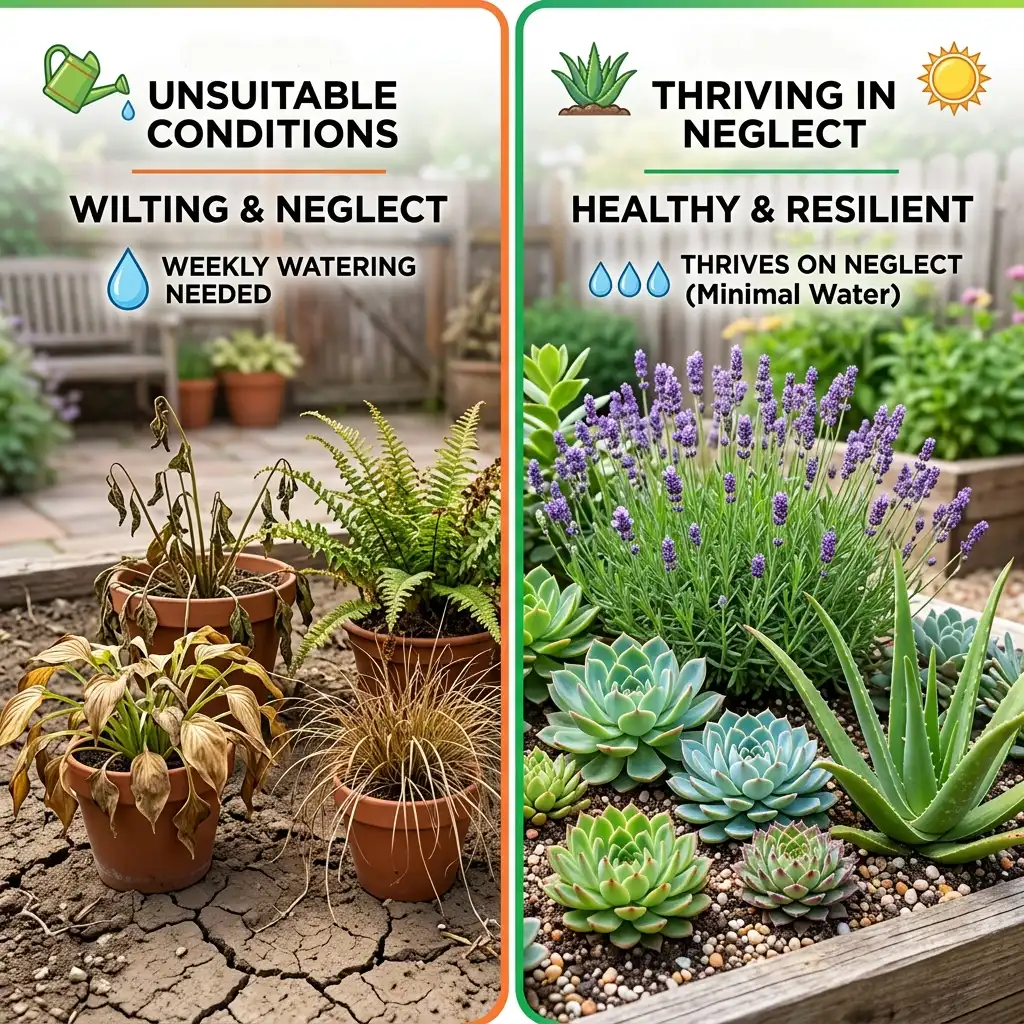
Native and drought-adapted plants can use about half as much water as non-native ornamentals like traditional turf grass, according to research from the Native Plant Society of Texas. Their deeper root systems reach moisture that shallow-rooted ornamentals can’t access — making them resilient in dry summers without constant irrigation.
Drought-tolerant doesn’t mean dull. Black-eyed Susans, coneflowers, salvia, ornamental grasses, native sedums, and blazing star are all striking, pollinator-friendly, and remarkably self-sufficient once established.
How to start:
- Use the Lady Bird Johnson Wildflower Center’s native plant finder (wildflower.org/plants) — search by your state, soil type, and sun exposure
- Ask staff at a local native plant nursery which species are proven performers in your specific region and hardiness zone
- Gradually replace water-hungry annuals and ornamental grasses with drought-tolerant perennials over one or two seasons
Timeline: 1–2 seasons to fully establish, but reduced watering from year one.
Build Soil Health and Reduce Waste
Healthy soil is the foundation of a sustainable garden. It grows stronger plants, stores more carbon, retains more water, and requires fewer interventions over time. These three changes will transform what’s happening beneath your feet.
Change 4: Start Composting
Composting is the process of turning kitchen scraps and yard waste — vegetable peels, coffee grounds, grass clippings, cardboard — into rich, dark material that works as a natural soil amendment and fertilizer.
Home composting diverts roughly 30% of household waste from landfills, where it would otherwise generate methane — a greenhouse gas up to 34 times more potent than CO₂ over a century. Food waste alone accounts for 58% of landfill methane emissions. On the cost side, a bag of quality bagged compost at a garden center runs $8–$15, but a home compost bin produces the equivalent for free. A backyard composting household can divert an average of 646 pounds of organic material per year.
Cities are catching up: as of 2025, New York City made curbside composting mandatory citywide, and nine states — including California, Massachusetts, and Vermont — have active composting legislation. Check if your municipality offers free or subsidized bins.
How to start:
- Set up a compost bin in a corner of your yard — look for subsidized bins through your local solid waste authority, or build a simple three-sided enclosure from pallets
- Balance “green” materials (vegetable scraps, fresh grass clippings) with “brown” materials (cardboard, dry leaves, paper) at roughly a 50/50 mix by volume
- Turn the pile every few weeks with a fork to speed decomposition
- Avoid adding meat, dairy, or cooked food to an open outdoor bin
Timeline: Usable compost in 3–6 months (faster with a tumbler or hot composting method).
Change 5: Stop Using Synthetic Chemicals
Transitioning away from synthetic pesticides, herbicides, and fertilizers toward organic alternatives — or redesigning your garden so you need fewer interventions in the first place.
Synthetic pesticides don’t discriminate. The same spray that kills aphids also kills the ladybugs, lacewings, and parasitic wasps that would have eaten those aphids naturally. Research cited by Dr. Doug Tallamy shows that non-native ornamentals already support 29 times less animal diversity than native plants — add synthetic chemicals on top, and you’ve effectively turned your yard into an ecological dead zone.
Synthetic fertilizers also degrade soil microbial life over time, creating a dependency cycle where the soil can no longer function without chemical inputs. Lawns alone receive tens of millions of pounds of chemical fertilizer annually, much of which runs off into waterways and contributes to algae blooms.
Practical swaps:
- Spray aphid-infested plants with a diluted dish soap solution, or simply knock them off with a strong stream of water
- Plant marigolds, nasturtiums, or dill near vegetables to naturally deter pests
- Feed your soil with homemade compost or aged manure rather than synthetic granules
- Accept minor pest damage — a few nibbled leaves mean your garden’s food web is working
Timeline: Soil health improvements visible within one season; natural pest balance stabilizes within 1–2 years.
Change 6: Use Cover Crops or Organic Mulches on Bare Soil
Cover crops are fast-growing plants — crimson clover, winter rye, buckwheat, or phacelia — sown in empty garden beds during the off-season to protect and enrich the soil rather than leaving it exposed.
Bare soil loses nutrients, compacts under rain, and erodes easily. Cover crops prevent all three, while nitrogen-fixing species like clover pull atmospheric nitrogen directly into the soil — essentially creating free fertilizer. Every 1% increase in organic matter in your soil helps it hold an additional 20,000 gallons of water per acre — a significant buffer during droughts.
How to start:
- In early fall, broadcast sow a cover crop mix onto cleared vegetable beds (seed packets available at most garden centers for a few dollars)
- Cut or till under the following spring, 2–3 weeks before planting
- Alternatively, use cardboard layered with compost as a “chop and drop” sheet mulch over empty beds through winter — this also smothers weeds without chemicals
Timeline: Visible soil improvement within one growing season.
Support Biodiversity
Biodiversity means the variety of living species in an ecosystem — from songbirds and fireflies down to the microscopic fungi threading through your soil. Biodiverse gardens are more resilient, more beautiful, and more ecologically valuable than the monoculture lawns most of us inherited. These two changes make the biggest difference for local wildlife.
Change 7: Plant Native Species
Native plants are species that evolved in your specific region over thousands of years. Depending on where you live, these include Eastern red columbine, Virginia bluebells, purple coneflower, goldenrod, native oaks, wild bergamot, and dozens of others that local insects, birds, and mammals have co-evolved with and depend on.
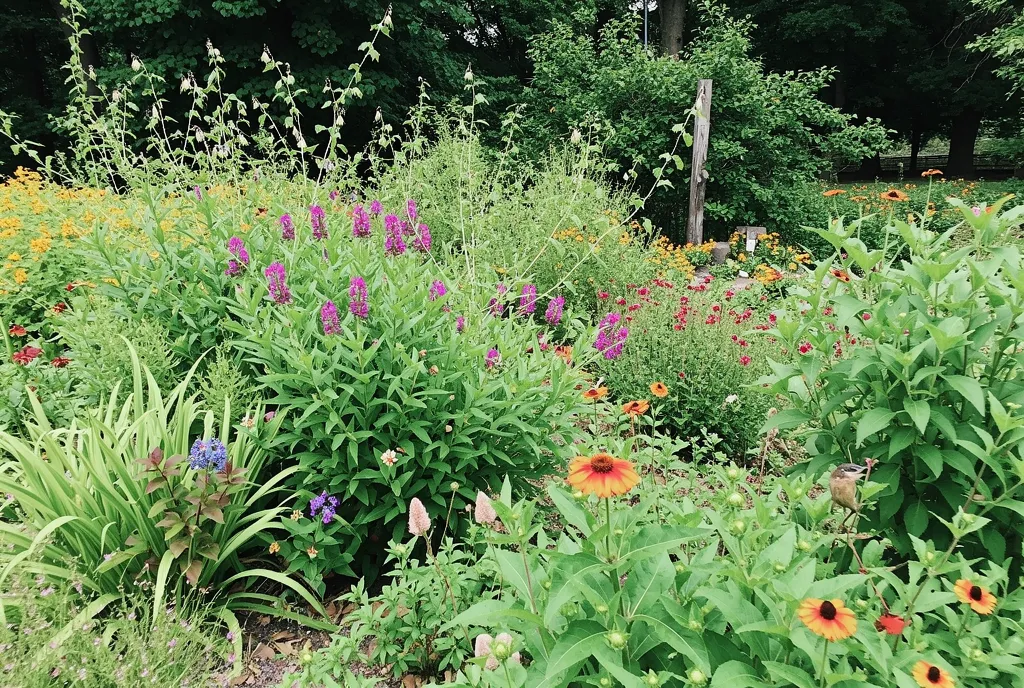
The numbers are stark. Non-native ornamentals support 29 times less animal diversity than native alternatives. A native flowering dogwood (Cornus florida) supports 117 species of moths and butterflies alone — a Kousa dogwood imported from China supports none. Pollinators and plants have evolved together over millennia: many insects can only feed on or pollinate the specific plants they evolved alongside. When those plants disappear from the landscape, insect populations collapse.
Pollinators — bees, butterflies, hoverflies, and other insects that transfer pollen between flowers — are essential to 75% of the world’s food crops. Supporting them in your yard is one of the most direct contributions a home gardener can make.
How to start:
- Use the Homegrown National Park native plant finder (homegrownnationalpark.org) or the Lady Bird Johnson Wildflower Center to find plants native to your ecoregion
- Start with one border or one section and replant it with natives over a season
- Prioritize keystone species — oaks, native cherries, goldenrod, and asters — which support disproportionately high numbers of other species
- Choose a mix of bloom times (early spring through late fall) to provide food for pollinators across the whole season
Timeline: Wildlife benefits typically visible in the first flowering season.
Change 8: Create Pollinator Habitats
Provide the physical structures that bees, butterflies, and other beneficial insects need for nesting, shelter, water, and overwintering — beyond just flowers.
Flowers alone aren’t enough. About 40% of bird species in America depend on backyard habitats. Seventy percent of native bees are ground-nesters that need bare, undisturbed soil. Butterflies need shallow water sources. Fireflies need leaf litter to overwinter as larvae. A yard that’s too tidy is a yard that’s too empty.
Simple habitat additions:
- Leave a small patch of bare, south-facing soil undisturbed for ground-nesting bees
- Install a mason bee house made from hollow bamboo canes in a sheltered, east- or south-facing spot
- Create a shallow dish of water with pebbles for bees and butterflies to land on safely
- Leave a pile of logs or a heap of fallen leaves in a corner for overwintering insects, firefly larvae, and small mammals like toads and salamanders
- Avoid raking leaves entirely in naturalistic areas — leaf litter is essential winter habitat
Timeline: Habitats are typically used within the same season, often within days.
Simplify and Go Zero Waste
The final two changes are about reducing what your garden consumes — in time, space, and single-use materials — so it becomes genuinely low-maintenance and low-impact year after year.
Change 9: Reduce Your Lawn Area
Replacing a portion of maintained, mown grass with alternatives that are more ecologically valuable, less water-hungry, and less labor-intensive.
Traditional American lawns are one of the least ecologically productive landscapes imaginable. They’re kept green with enormous water inputs — accounting for 50–75% of a home’s summer water use — plus chemical treatments and gas-powered mowers that produce emissions equivalent to driving 300 miles for every hour of operation. And they’re nearly lifeless for most wildlife.
Reducing your lawn even partially has outsized benefits. Doug Tallamy’s Homegrown National Park initiative calls for 20 million acres of lawn to be converted to habitat — the equivalent of an entirely new national park system, one yard at a time. You don’t have to do it all at once.
Practical alternatives:
- Clover lawn: Overseed white or micro clover into existing grass. No mowing required, naturally fixes nitrogen, and bees love it
- Wildflower meadow patch: Stop mowing a section and sow a regional native wildflower mix — the National Wildlife Federation’s Garden for Wildlife program has regional guides
- Native groundcovers: Creeping phlox, wild ginger, Pennsylvania sedge, or green-and-gold provide texture and wildlife value with minimal upkeep
- Permeable hardscape: Gravel, flagstone, or decomposed granite in high-traffic areas instead of water-hungry grass
Timeline: Clover establishes within one season; meadow areas typically need 2 seasons to fully develop.
Change 10: Eliminate Single-Use Garden Plastics
Replacing disposable plastic pots, labels, ties, and bags with reusable, biodegradable, or durable alternatives.
Single-use plastic is one of the most easily avoided waste streams in any garden. Cheap plastic labels snap within a season and end up in compost bins. Plastic nursery pots crack and get discarded. Twist ties get thrown away after harvest. None of this is necessary — and all of it ends up in landfills or as microplastic contamination in soil and water.
Simple swaps:
- Labels: Use wooden popsicle sticks, cut sections of old mini blinds, or metal landscape stakes — all reusable for years
- Pots: Invest once in terracotta, glazed ceramic, or thick recycled-content plastic pots that last indefinitely; use newspaper or coir pots for seedlings (they plant directly in the ground)
- Ties: Cut strips from old cotton T-shirts, or use natural jute twine
- Bags: Buy compost in large quantities and reuse the bags, or make your own
Timeline: Immediate waste reduction from the first swap.
Your Action Plan — Where to Start
The risk with a list of 10 changes is feeling overwhelmed and doing nothing. Here’s a realistic, staged plan.
Month 1: Quick Wins
These require minimal cost, time, or effort — and deliver results right away:
- Set up a rain barrel on a downspout — one afternoon, done
- Mulch one or two beds with bark, leaves, or free wood chips
- Swap one bag of plastic labels for wooden or metal alternatives
- Start a compost bin — even a simple heap in a corner works
Months 2–3: Medium Effort
These take a little more planning but are still very manageable:
- Stop buying synthetic fertilizer — switch to your new compost and organic alternatives
- Plant 3–5 native species in one border or large container
- Add one pollinator habitat feature — a log pile, bare soil patch, or water dish
- Replace one synthetic pesticide with a physical or organic alternative
Months 4–6: Longer-Term Investments
These take a season or more but deliver lasting, compounding returns:
- Introduce drought-tolerant native plants as you replace struggling ornamentals
- Sow a cover crop in empty fall beds
- Convert a patch of lawn to clover, native wildflowers, or groundcover
- Audit all single-use plastics and build a replacement plan over the winter
Frequently Asked Questions
Q: Do I need a big yard to make these changes worthwhile?
Not at all. Most of these practices scale down to a balcony, patio, or a few containers. Native wildflowers grow happily in window boxes. A small worm bin fits under a kitchen sink. A shallow dish of water with pebbles on a balcony railing can support mason bees. Even a single pot of native coneflower on a stoop contributes to the local food web.
Q: How much will all of this cost?
You can make a meaningful start for under $50. A rain barrel kit ($30–$60, sometimes subsidized through local water utilities), a bag of bark mulch ($8–$12), and a packet of native wildflower seed ($4–$6). Many cities and water districts offer rebates or free equipment for rain barrels and compost bins — check your local utility’s website. Composting is essentially free once you have a bin, and many changes — reducing mowing, stopping chemical purchases, making your own compost — save money over time.
Q: I rent my home. Can I still do any of this?
Yes. Focus on the portable and non-structural changes: container gardening with native plants, a small worm bin (Worm Factory or similar) for composting kitchen scraps, reusable pots and labels, and a balcony rain barrel. If you have access to any shared outdoor space, a small wildflower patch or pollinator water dish requires no permanent modifications.
Q: What if I don’t know which plants are native to my region?
The Lady Bird Johnson Wildflower Center’s plant finder (wildflower.org/plants) lets you search by state, region, soil type, and light conditions. Homegrown National Park’s keystone plant guide (homegrownnationalpark.org) tells you which native plants support the most wildlife in your specific area. Your local county extension office can give free, region-specific advice, and local native plant societies often hold sales and plant swaps throughout the year.
Q: Is organic gardening harder than conventional gardening?
In the short term, there’s a small adjustment period — particularly if your soil has been dependent on synthetic fertilizers. But within a season or two, gardens managed organically become less demanding, not more. Healthy soil grows stronger, more pest-resistant plants that need fewer inputs. Most experienced organic gardeners will tell you they do far less work than they used to.
Q: How long before I see real results?
Some changes are immediate; others unfold over a season. A rough guide:
Within weeks: Mulch reduces watering needs; pollinator habitats attract first visitors
Within months: Compost ready to use; cover crops visibly improving soil structure
First full season: Native plants flowering; drought-tolerant species establishing
2+ seasons: Soil health significantly improved; biodiversity noticeably increased; lawn alternatives fully filled in
Q: Can I really make a difference on my own?
Yes — and you’re far from alone. America has 40–50 million acres of residential lawn. Individual choices aggregate into neighborhood-scale habitat corridors, regional water savings, and measurable reductions in chemical runoff. Start in your own yard, share what works with neighbors, and consider joining a local chapter of Wild Ones (wildones.org) or your regional native plant society to connect with others doing the same. The impact compounds.
Helpful Resources
- Lady Bird Johnson Wildflower Center — native plant database searchable by state
- Homegrown National Park —native planting guides, keystone species, map your garden
- National Wildlife Federation — Garden for Wildlife — certify your yard as wildlife habitat
- US EPA — Composting —composting basics and local program finder
- Bugwood / USDA PLANTS database — invasive species and native plant lists by state
- ChipDrop — free wood chip mulch delivered by local arborists
- Your county extension office — the most underrated resource in American gardening; free, local, expert advice on what grows in your specific soil and climate
A Final Word
Sustainable gardening is not about doing everything perfectly. It’s about doing a little more, and a little better, than last season. Every rain barrel installed is water saved. Every native plant added is a habitat created. Every bag of compost made at home is methane kept out of the atmosphere.
The gardener who installs a rain barrel and scatters some clover seed this month has done something genuinely useful. The one who waits until she has a full native landscape design, a budget for raised beds, and the perfect plant list — and never quite gets there — has not.
Start with one change. See what happens. Then add another.
Your garden is already doing something remarkable. These small shifts help it do more.
Amazon and the Amazon logo are trademarks of Amazon.com, Inc, or its affiliates.

Gardener with 12+ years of hands-on experience growing vegetables and fruits in home gardens. Learned through trial, error, and observation — not textbooks. Shares what actually works (and what doesn’t) in real-world conditions. No fluff, no hype — just practical tips from the soil up.