We use affiliate links to run our site. When you buy through links on our site, we may earn an affiliate commission, without any added cost to you. Learn more
Papayas are one of the most commonly grown fruit. But one of the very common problems associated with growing papayas is the identification of the plant. Not planting the correct papaya plant for your garden can result in plants with huge flowering but no fruits.
See, there are 3 types of papaya plants and not all of them will bear fruits. Some of them can pollinate themselves but not others.
So in today’s post, we will discuss what causes papaya plants to bear flowers but not fruits, and how to choose the right papaya plant for your garden.
Types of Papaya Trees:
There are mainly 3 types of papaya trees
- The male papaya trees, (only produces pollen; no fruit. Flowers are many, small, tubular, and borne on long stalks).
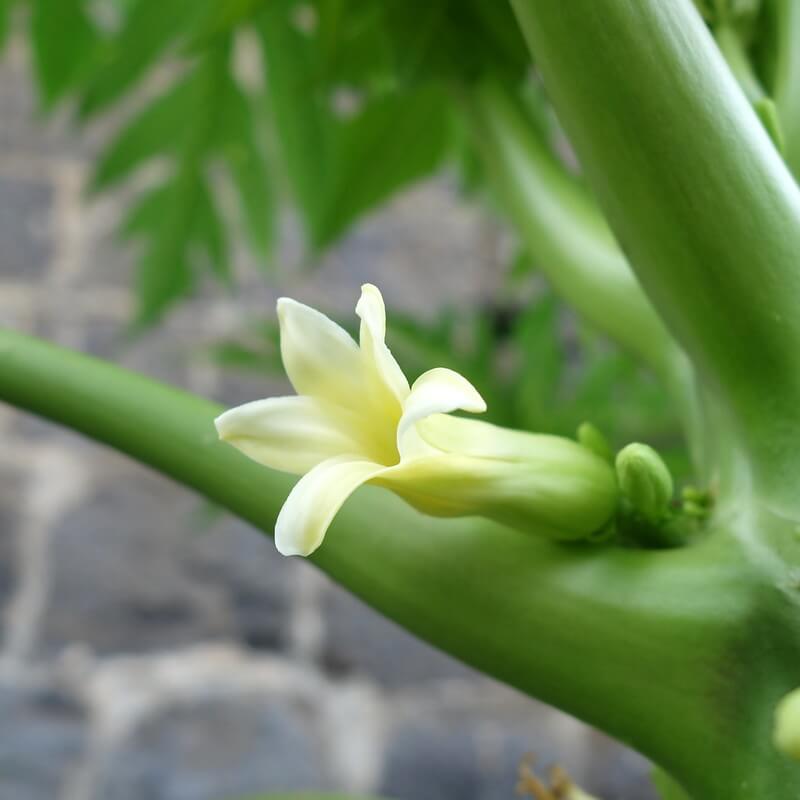
- The female papaya trees, (flowers have a well-developed ovary and, when pollinated, produce fruit with viable seeds. Flowers appear close to the stem at leaf nodes.)
- The hermaphrodite papaya trees. (Flowers contain both stamens (male) and pistil/ovary (female), so these plants can often self-pollinate; widely preferred for home and commercial growing.)
How to IDENTIFY each type of Papaya Tree
Male papaya (key signs):
The male papaya tree produces male papaya flowers.
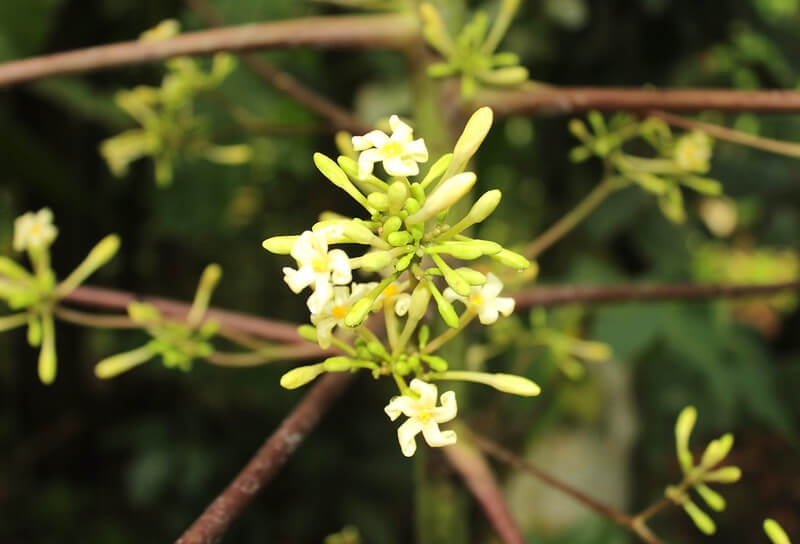
- Flower shape: small, tubular, clustered; many per inflorescence.
- Location: flowers hang from long stalks away from the leaf nodes.
- Fruit: male plants do not form mature fruit.
Female papaya (key signs):
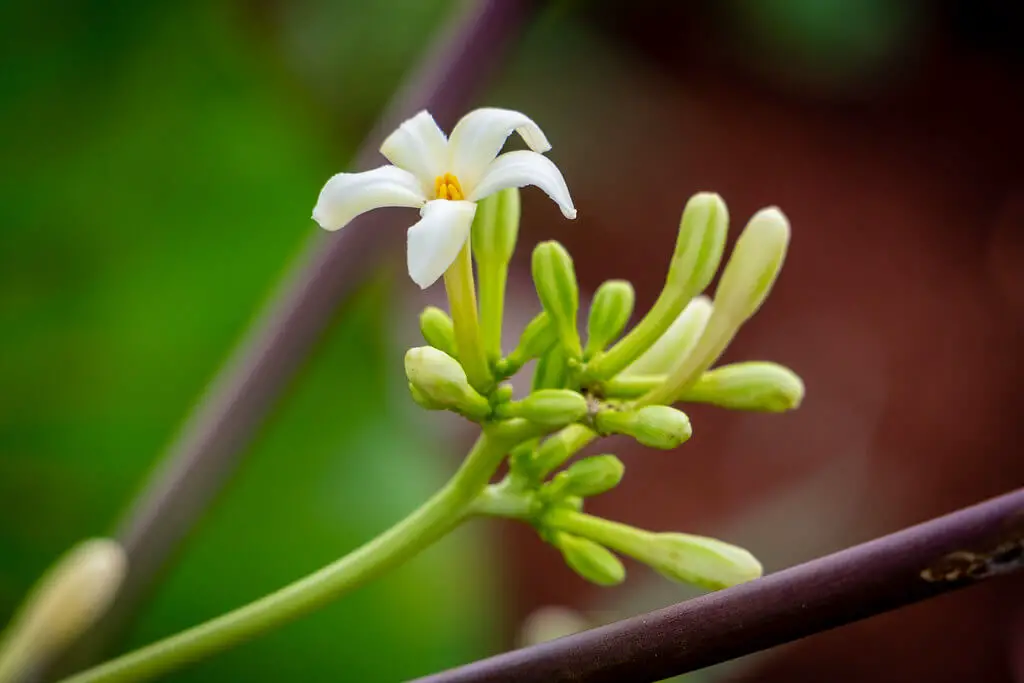
- Flower shape: larger, bulbous base (ovary) with a distinct pistil; usually single flowers.
- Location: flowers form close to the trunk at leaf nodes (axillary).
- Fruit: when pollinated the ovary develops into rounder fruits with seeds.
Hermaphrodite papaya (key signs):
- Flower shape: bisexual flowers — a visible ovary plus stamens; often intermediate in appearance between male and female.
- Fruit: typically elongated or pear-shaped and develop without needing a separate male plant.
Practical field checklist:
- Wait until first flowering — Papaya plants do not show definitive sexual characteristics until they produce their first true flowers. Wait for the initial bloom rather than judging by juvenile growth or leaf shape.
- Inspect flower location: Female and hermaphrodite flowers are borne singly or in small groups close to the stem at the leaf nodes (axillary), so look for flowers sitting next to the trunk. Male flowers are typically produced in long, pendulous clusters on extended stalks (inflorescences) that hang away from the trunk and are more numerous. Use a hand lens or gently part the leaves to check near the node—early-season flowers can be small and easy to miss.
- Examine flower parts: Presence of large ovary = female function; stamens visible = male function. Hermaphrodite flowers contain both pistil/ovary and functional stamens — you may see both the bulbous base and pollen-bearing structures in the same flower. Photograph or take a close-up so you can compare later.
- Observe fruit shape after set —Once fruit sets, shape gives another identification clue: hermaphrodite varieties commonly produce longer, cylindrical or pear-shaped fruits, while female-only plants often yield rounder, more spherical fruit.
Can You Identify Male and Female Papaya Seeds:
Unfortunately, there is no way to know before planting if the seeds will result in a male or female plant. You have to plant it, let it grow, and then see if it’s a male, female plant, or hermaphrodite papaya plant.
Practical option: buy named hybrids or hermaphrodite cultivars from reputable nurseries when you need certainty.
Why papaya flowers but no fruit — common causes
Here are some of the reason why a papaya tree might not bear frutis:
- No compatible pollen nearby — if you have female-only plants without male or hermaphrodite pollinators, fruit won’t set.
- Poor pollination conditions — lack of pollinators, high wind, or time of day mismatches.
- Environmental stress — extreme temperatures, water stress, or waterlogging can cause flowers to be sterile or change floral sex expression.
- Physiological sex changes — under certain stresses stamens or carpels may reduce or fuse, lowering fruit quality or quantity.
- Variety traits — some cultivars are more likely to change sex expression under stress.
How to ensure fruit — step-by-step actions
Here are a few things you can do to ensure you get the fruits from a papaya plant:
- Choose the right plant source: – Buy hermaphrodite or named hybrid seedlings if you want a single reliable fruiting plant.
- Plant multiple seedlings: If starting from seed, raise several seedlings; keep the healthiest hermaphrodite/female and remove excess males to save space.
- Provide good growing conditions: Stable moisture (avoid waterlogging and prolonged drought), balanced fertilization (N-P-K plus micronutrients), and well-draining soil.
- Promote pollination: Encourage pollinators (flowers, insects). If needed, hand‑pollinate female flowers using a small brush dipped in pollen from male/hermaphrodite flowers.
- Manage temperature and stress: Provide shade during extreme heat or protect young plants from cold snaps; maintain consistent soil moisture.
- Planting layout and spacing: Space plants so air and pollinators can move freely; if you grow mixed sexes, a common recommendation is at least one male per several females (local recommendations vary; use hermaphrodite cultivars to avoid this need).
- Remove unwanted males: Once you have enough pollinators or self-pollinating hermaphrodites, thin out extra male plants to free space.
Propagation notes and commercial tip
- For home gardeners who want a guaranteed fruiting tree: purchase nursery-raised grafted or hybrid hermaphrodite seedlings labeled for fruit production.
- In commercial orchards, chosen cultivars, planned male:female ratios, and pollinator management are used to maximize yield.
Can I Grow Only Female Papaya Trees:
Male papaya trees only bloom they don’t produce fruit but they are essential for pollinating the female ones. So you have at least one or two male papaya plants around.
Now, if you have a bunch of male papaya trees, just thin them out and make space for the other trees.
Common mistakes to avoid
Here are some of the common mistakes you need to avoid:
- Relying on a single seedling and expecting fruit — Don’t expect the first seedling to be the tree you want: seeds produce males, females, and hermaphrodites unpredictably..
- Ignoring environmental stress — Heat extremes, cold snaps, drought or waterlogging can alter flower development and cause plants to shift sex expression or fail to set fruit.
- Removing male plants too early if you rely on them for pollination. Keep at least one or two pollen‑bearing plants until fruit set is well established, then thin excess males once females are reliably producing.
FAQs (Frequently Asked Questions)
How soon after planting will a papaya flower and reveal sex?
Typically 6–12 months depending on variety, climate, and vigor — check first flowers to identify sex.
Can a papaya change sex during its life?
Yes, environmental stress and certain conditions can cause sex expression shifts; it’s not common but possible.
Are hermaphrodite papayas best for small gardens?
Yes — hermaphrodite plants are often preferred because they self-pollinate and reduce the need for multiple plants.
Do I need male trees at all?
Only if you rely on female-only plants from seed. If you use hermaphrodite cultivars, male plants aren’t necessary.
Quick summary:
Papaya plants are male, female, or hermaphrodite. Only female and hermaphrodite flowers have ovaries and will produce fruit when pollinated. Hermaphrodite trees often self-pollinate and are the best choice for single-plant gardens. If you grow from seed, raise several seedlings and keep the healthiest fruiting plant.
Thank you for reading the article.
If you like this information don’t forget to PIN IT!!!
Amazon and the Amazon logo are trademarks of Amazon.com, Inc, or its affiliates.

Gardener with 12+ years of hands-on experience growing vegetables and fruits in home gardens. Learned through trial, error, and observation — not textbooks. Shares what actually works (and what doesn’t) in real-world conditions. No fluff, no hype — just practical tips from the soil up.