We use affiliate links to run our site. When you buy through links on our site, we may earn an affiliate commission, without any added cost to you. Learn more
It’s been raining cats and dogs for the past hour, and you’re watching rivers of water rush down your driveway, across the street, and straight into the storm drain. All that precious rainwater — gone. Worse, it’s dragging lawn chemicals, pet waste, and road grime right into your local waterway.
Sound familiar? Well, there’s a beautiful, surprisingly simple solution sitting right in your backyard. Enter the rain garden — one of the most underrated yet powerful tools in sustainable landscaping.
The rain garden is an interesting concept. It is also a great example of self-watering gardening. Rain gardening not only increases your gardening beauty but also helps in water preservation. Truth be told a rain garden might just be the smartest upgrade your outdoor space ever gets.
What Is A Rain Garden?
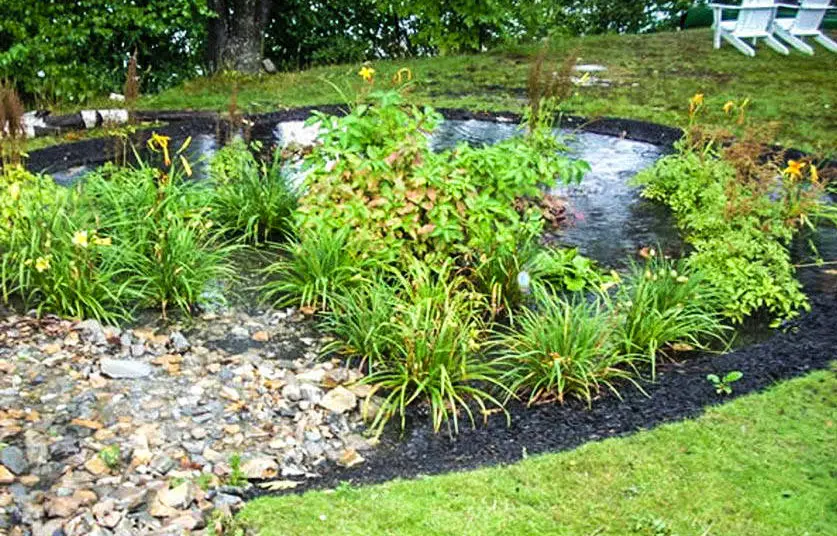
Let’s start with the basics. A rain garden is a shallow, planted depression or hole in your yard that’s specifically designed to collect and absorb rainwater runoff from impervious surfaces like roofs, driveways, walkways, and lawns. Think of it as a natural sponge — one that’s pretty enough to actually enhance your landscape (source).
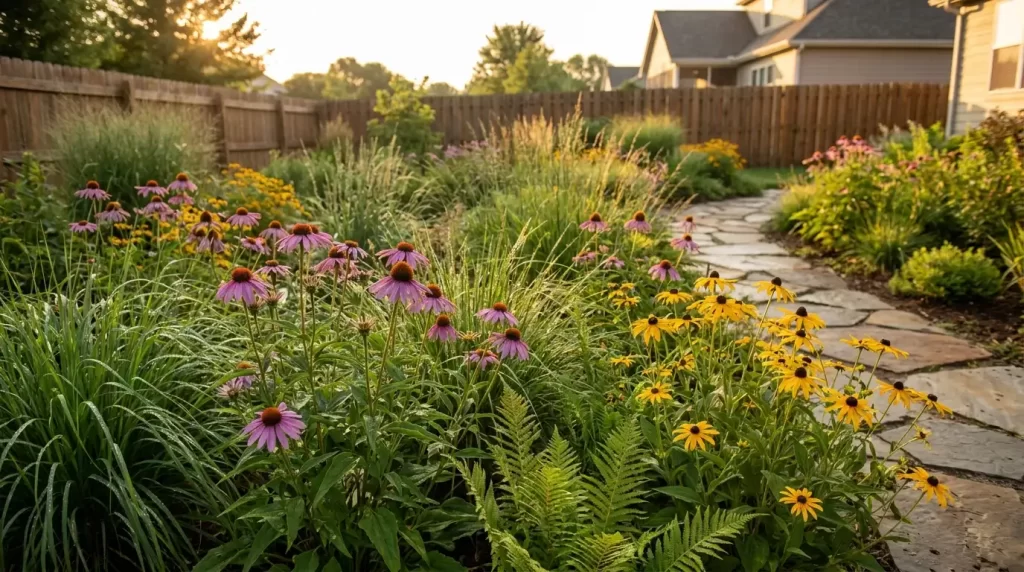
Unlike a pond or a bog, a rain garden doesn’t stay wet. It’s engineered to drain completely within 24 to 48 hours after a rain event, which means no standing water, no breeding ground for mosquitoes, and no soggy mess. It’s the Goldilocks of water features — wet when it needs to be, dry when it doesn’t.
The rain garden is designed to withstand a great level of moisture and concentration of nutrients. It allowed the run-off water to slow down as it goes downhill and thus reduces its erosive power.
Rain garden looks as like any other garden from outside but the specialty lies in the fact that it gets its water from the runoff and what happens after the water enters the garden.
It acts as a personal water quality system as it filters the wastewater from the roof and other hard surfaces and recharges it.
How Does a Rain Garden Work?
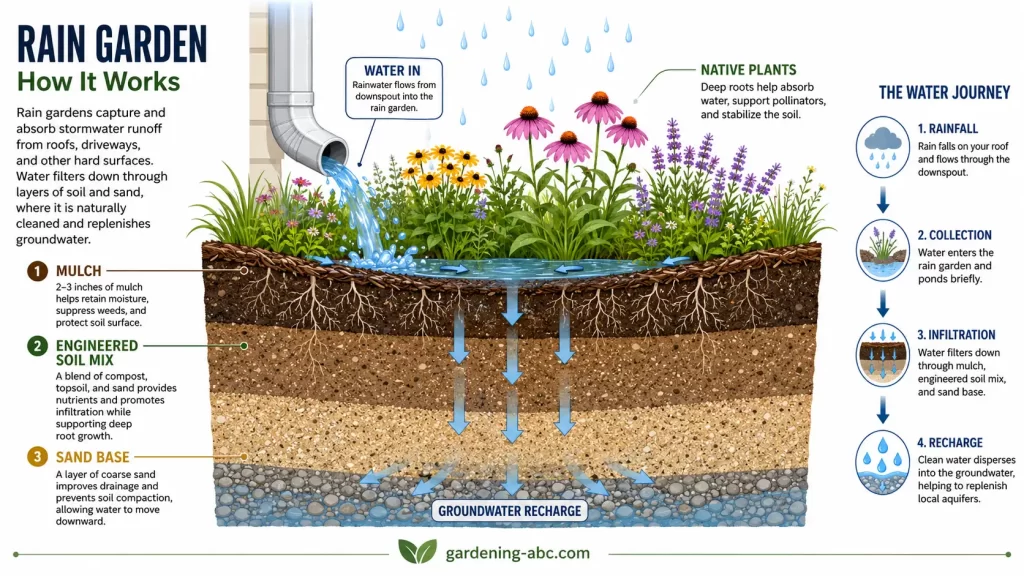
Here’s where it gets genuinely cool. When rain falls on hard surfaces, it can’t soak in — so it runs off, picking up pollutants along the way. A rain garden intercepts that runoff by directing it into a bowl-shaped garden bed filled with specially chosen soil and deep-rooted native plants.
The water pools temporarily, then slowly filters down through the soil layers, where plant roots and beneficial microorganisms break down pollutants naturally. It’s basically a little underground water treatment plant, disguised as a flower bed.
Rain Garden vs. Regular Garden — What’s the Difference?
Great question! A regular garden bed is planted wherever you think it looks nice. A rain garden, on the other hand, is strategically placed to intercept stormwater. It uses a specific soil mix that drains faster than typical garden soil, and it features plants that can handle both temporary flooding AND drought — because let’s be honest, not every week brings a downpour.
The Incredible Benefits of Rain Gardens
Why should you bother? Let me count the ways. Rain gardens deliver a triple win: they’re good for the environment, good for your property, and good for your community. Let’s break that down.
Environmental Benefits
A well-designed rain garden can absorb up to 30% more water than a conventional lawn. That’s not a typo — thirty percent. By capturing and filtering runoff, rain gardens reduce the amount of polluted water entering our streams, rivers, and lakes (source).
They also recharge groundwater supplies, support local wildlife by providing habitat and food sources, and reduce erosion (source). If the planet could send a thank-you card, it would.
Aesthetic and Property Benefits
Let’s be shallow for a moment — rain gardens look gorgeous. Filled with colorful native wildflowers, ornamental grasses, and lush shrubs, they add texture, color, and biodiversity to any yard.
They can even increase your property value, because buyers love eco-friendly features. Think of it as curb appeal with a conscience.
Community and Public Health Benefits
When entire neighborhoods adopt rain gardens, the collective impact is massive. Municipalities spend billions each year managing stormwater.
Rain gardens can significantly reduce that burden, keeping infrastructure costs down and protecting public waterways from the toxic cocktail of lawn fertilizers, heavy metals, and bacteria that stormwater carries. It’s grassroots environmental action in the most literal sense.
[su_note note_color=”#ecece2″]Check out: 7000+ Landscaping Ideas[/su_note]
Choosing the Right Location for Your Rain Garden
Location, location, location — it’s not just a real estate mantra. Picking the right spot is arguably the most critical step in rain garden planning. Here’s your checklist:
Place the rain garden at least 10 feet away from your home’s foundation to prevent water from seeping into your basement. Keep it away from septic systems and utility lines.
Ideally, position it at a natural low point in your yard where water already tends to collect, or at the end of a downspout drainage path. And make sure the site gets at least partial sunlight — most rain garden plants thrive in sun to partial shade.
Soil Testing — Don’t Skip This Step!
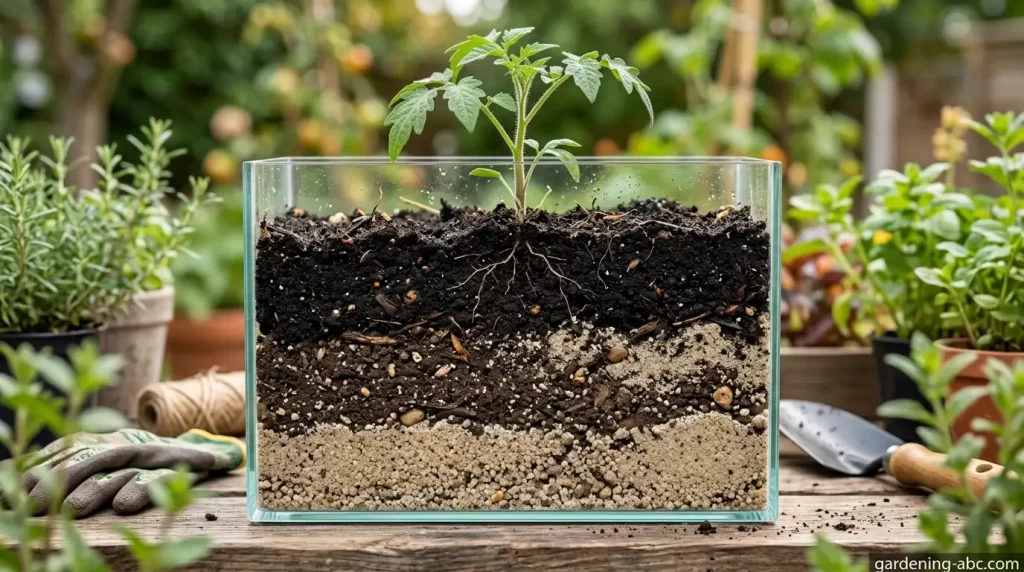
Your rain garden’s effectiveness depends entirely on how fast water drains through your soil. You can do a simple percolation test: dig a hole about 6 inches deep, fill it with water, and measure how quickly it drains. If it drains at 0.5 to 3 inches per hour, you’re golden. If it drains slower, you’ll need to amend your soil with sand and compost — or even install an underdrain system.
Sizing Your Rain Garden Correctly
Size matters here. A rain garden that’s too small will overflow constantly; one that’s too large is a waste of effort. A general rule of thumb: your rain garden should be about 20 to 30% of the size of the area draining into it. So if 500 square feet of roof drains toward your garden, you’re looking at a rain garden of roughly 100 to 150 square feet.
Rain Garden Sizer
Calculate the perfect size and depth for your garden.
Designing Your Rain Garden
Now for the fun part — design! This is where your rain garden goes from being a functional hole in the ground to a genuine showpiece.
Shape and Depth Considerations
Rain gardens are typically kidney-shaped or crescent-shaped to maximize their catchment capacity while looking natural. The depth should be between 4 and 8 inches for most climates — deep enough to hold a meaningful volume of water, but shallow enough to drain within that critical 48-hour window. On sloped sites, you may need to build up a berm (a small earthen wall) on the downhill side to hold water in place.
Inlet, Overflow, and Outlet Planning
Every rain garden needs three key features: an inlet (where water enters — often a downspout or a gravel channel), an overflow area (a low point in the rim where excess water can safely escape during extreme storms), and a stable outlet (to direct overflow away from your foundation). Getting these three elements right is the difference between a thriving rain garden and a waterlogged nightmare.
Best Plants for a Rain Garden
Plants are the heart and soul of your rain garden. They’re not just decoration — they’re doing the heavy lifting of absorbing water, filtering pollutants, and providing wildlife habitat. Choosing the right ones makes all the difference.
Native Plants: Your Secret Weapon
Native plants are the undisputed champions of the rain garden world. They’re adapted to your local climate, support native pollinators, and also becomes drought-tolerant once established. Native plants have deep root systems that are incredibly effective at absorbing water and breaking up compacted soil.
Great choices (depending on your region) include Black-Eyed Susans, Swamp Milkweed, Blue Flag Iris, Cardinal Flower, Joe-Pye Weed, Switchgrass, and Prairie Dropseed. Think of native plants as the local legends — they already know the neighborhood.
Plants to Avoid in a Rain Garden
Not every plant can handle the feast-or-famine moisture cycle of a rain garden. Avoid plants with shallow roots, those that can’t tolerate wet feet, and invasive species.
Turf grass is also a poor choice — it compacts too easily and provides little filtration value. When in doubt, consult your local extension office for a region-specific plant list.
Step-by-Step: Building Your Rain Garden
Ready to get your hands dirty? Here’s the condensed build process:
- Step 1 — Mark out your rain garden’s shape using spray paint or a garden hose.
- Step 2 — Remove existing grass and vegetation.
- Step 3 — Excavate to your target depth, setting aside topsoil.
- Step 4 — If needed, amend your soil mix (typically 50-60% sand, 20-30% compost, 20-30% topsoil).
- Step 5 — Build any necessary berms or overflow channels.
- Step 6 — Add a layer of mulch (2-3 inches) to retain moisture and suppress weeds.
- Step 7 — Plant your selected native plants, spacing them according to their mature size.
- Step 8 — Water them in well and connect your downspout or inlet.
Pro tip: plant your rain garden in the fall. Fall rains help establish root systems before winter, and by spring, your plants will be ready to take on whatever storm season throws at them.
Maintaining Your Rain Garden Through the Seasons
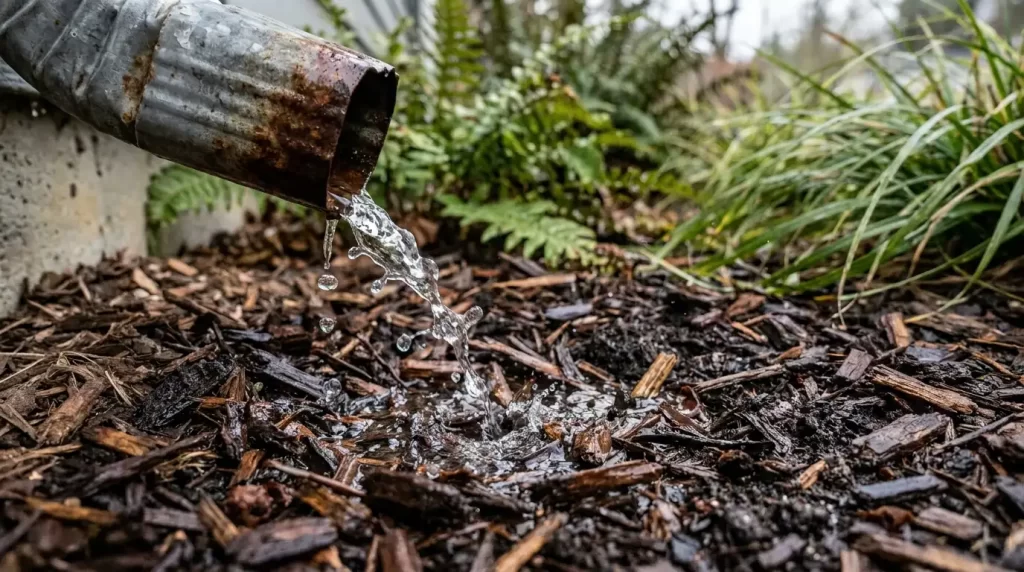
Here’s the good news: a well-established rain garden is remarkably low maintenance. Once your native plants get their roots down (usually after the first full growing season), they essentially take care of themselves. But here’s what you should plan to do:
Spring: Remove any dead plant material, check for erosion or settling, and refresh your mulch layer. Summer: Water during prolonged dry spells in the first year; established plants generally won’t need it. Pull weeds before they go to seed. Fall: Leave seed heads intact for wildlife, and add a fresh layer of mulch before winter. Winter: Minimal action needed — just enjoy the view from inside.
Common Mistakes and How to Avoid Them
Even the most enthusiastic rain gardeners can trip up. Here are the biggies:
- Planting too close to the foundation is the #1 mistake — always maintain that 10-foot buffer.
- Using the wrong soil mix is a close second; heavy clay soil will turn your rain garden into a permanent pond.
- Skipping the overflow outlet is asking for trouble during heavy storms.
- And choosing non-native, invasive plants can turn your eco-friendly project into an ecological headache.
Do your homework, test your soil, and plan before you dig.
Rain Gardens and Climate Change: A Bigger Picture
Here’s something worth pausing on. Climate change is making rainfall events more intense and more unpredictable. Flooding is increasing. Urban heat islands are expanding. Our aging stormwater infrastructure is straining under the pressure. Rain gardens are not a silver bullet — but they’re a powerful, scalable, affordable piece of the puzzle.
Imagine if every home in your city had a rain garden. The cumulative reduction in stormwater runoff would be staggering. We’re talking about a genuinely citizen-powered adaptation to climate change, one backyard at a time. That’s not idealism — that’s math.
Fill in your details, then click "Print" to save as a PDF or print directly.
Rain Garden Planting Plan
Plant Selection List
| Zone | Plant Name (Common) | Scientific Name | Quantity | Notes (Bloom time, Height) |
|---|---|---|---|---|
| Wet (Center) | ||||
| Wet (Center) | ||||
| Wet (Center) | ||||
| Transition | ||||
| Transition | ||||
| Transition | ||||
| Dry (Edges) | ||||
| Dry (Edges) | ||||
| Dry (Edges) |
Conclusion
Rain gardens are one of those rare ideas that tick every box: environmentally beneficial, aesthetically beautiful, cost-effective, and achievable by virtually anyone with a yard and a few weekends to spare. They transform a passive landscape into an active participant in the water cycle, filtering pollutants, recharging groundwater, and supporting biodiversity all at once.
Whether you’re motivated by environmental stewardship, a desire to reduce your water bill, the goal of attracting more butterflies and bees, or simply the urge to do something meaningful with that soggy corner of your yard — a rain garden delivers. So grab a shovel, pick your plants, and let it rain.
I hope you got some useful information from this post. If you are really thinking about installing or maintaining a rain garden, this book by Lynn M. Steiner can be a real treasure. There is a wealth of information on this subject.
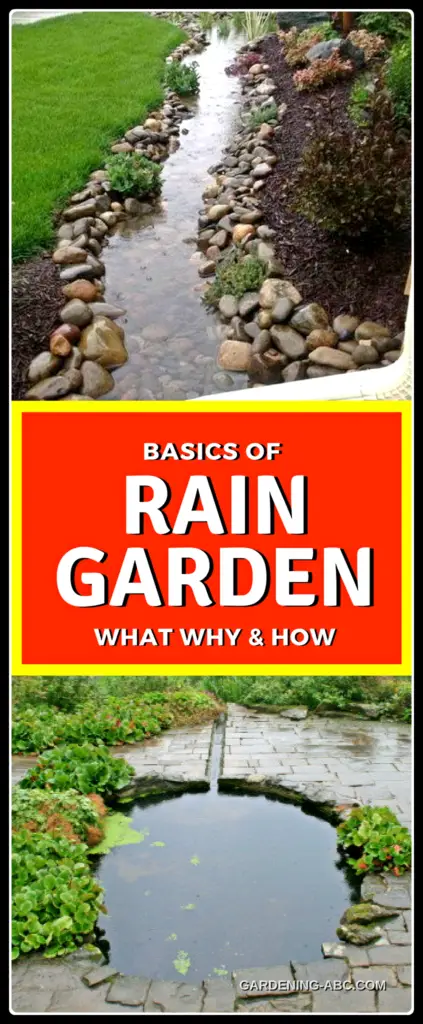
Like the post? Don't forget to PIN IT
Frequently Asked Questions (FAQs)
Do rain gardens attract mosquitoes?
This is probably the #1 concern people have, and the answer is: not if it’s designed properly. Mosquitoes need standing water for at least 7-10 days to breed. A properly designed and well-draining rain garden empties completely within 24-48 hours after a rain event, making it a poor habitat for mosquitoes. If you notice water sitting for longer, it’s a sign your soil needs amendment or your garden needs maintenance.
How much does it cost to build a rain garden?
DIY rain gardens can cost as little as $200-$400 for a small installation, primarily covering plants and mulch. Larger or more complex installations with professional landscaping help can run $1,000 to $4,000 or more. Many municipalities and environmental agencies offer rebates or free native plant programs to offset costs — it’s worth checking with your local government before you start.
Can I build a rain garden in heavy clay soil?
Clay soil drains very slowly, which presents a challenge — but it’s not insurmountable. You’ll need to excavate deeper and replace the existing soil with a fast-draining mix (high in sand and compost). In some cases, installing an underdrain (a perforated pipe below the garden that channels excess water away) is the most practical solution for heavy clay areas.
How long does it take for a rain garden to establish?
Plan for a full growing season — typically one year — for your rain garden plants to establish strong root systems. During that first year, you’ll need to water during dry spells and stay on top of weeds. After that, a well-planted rain garden with native species becomes largely self-sufficient and requires only minimal seasonal maintenance.
Will a rain garden work in a very small yard?
Absolutely! Rain gardens are infinitely scalable. Even a 50-square-foot rain garden can make a meaningful difference by capturing runoff from a single downspout. If you’re working with limited space, focus on placing the garden directly at the end of a downspout and choose compact native plants that pack a lot of ecological punch in a small footprint. Size is no excuse — every drop counts.
Amazon and the Amazon logo are trademarks of Amazon.com, Inc, or its affiliates.